

Boeing case study
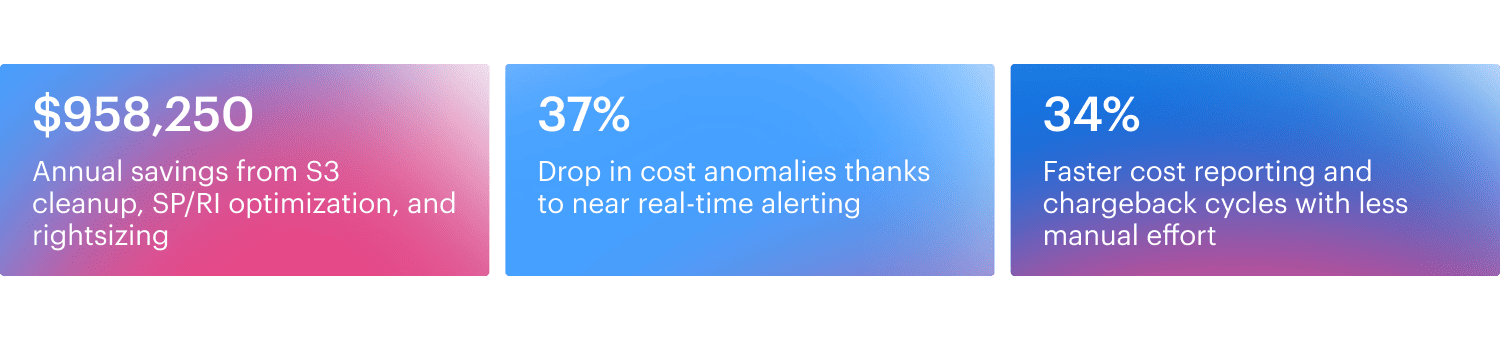
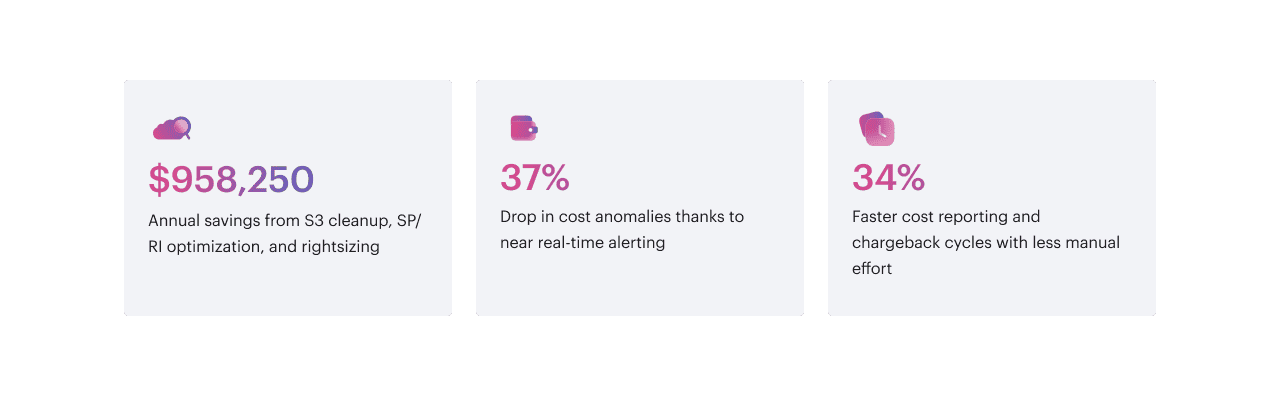
How Cloudaware helped Boeing get multi-cloud and AI cost clarity, saving $958,250 per year.
About Boeing
Boeing designs, builds, and supports commercial aircraft, defense platforms, and space systems for customers in more than 150 countries. Its engineering, analytics, and manufacturing workloads run across AWS, Microsoft Azure, and Google Cloud.
As that footprint expanded, the FinOps team needed cost decisions that were fast, explainable, and consistent across clouds, especially as AI usage became a material cost driver.
Challenges
Boeing’s cloud spend was not “out of control,” but it was getting harder to explain and harder to optimize as usage patterns shifted across teams and clouds. The biggest gaps showed up in day-to-day FinOps work:
-
AI costs were visible in invoices, not in decisions. Azure OpenAI, AWS Bedrock, and SageMaker usage grew, but it was difficult to map that spend to teams, workloads, and the drivers behind it.
-
Commitments were under-leveraged. Savings Plans (SP) and Reserved Instances (RI) coverage was not consistently tracked, so opportunities were missed and expirations were discovered late.
-
S3 storage waste accumulated quietly. Idle, orphaned, and underutilized storage increased monthly spend without a clear operational owner for cleanup.
-
Anomalies were detected after the fact. Spikes and drops were found during review cycles rather than close to the change that caused them.
-
Chargeback was slow and friction-heavy. Teams needed resource-level cost context and repeatable monthly reporting, not manual exports and ad hoc spreadsheets.
-
Rightsizing did not stick. Fragmented data made it easy to identify problems once, but hard to keep optimization as a steady workflow.
Boeing needed an automated FinOps layer that could turn multi-cloud and AI usage into a consistent set of reports, alerts, and optimization actions.
Solutions
Boeing implemented Cloudaware’s FinOps suite to make costs explainable at the level where teams could act: accounts, workloads, and owners.
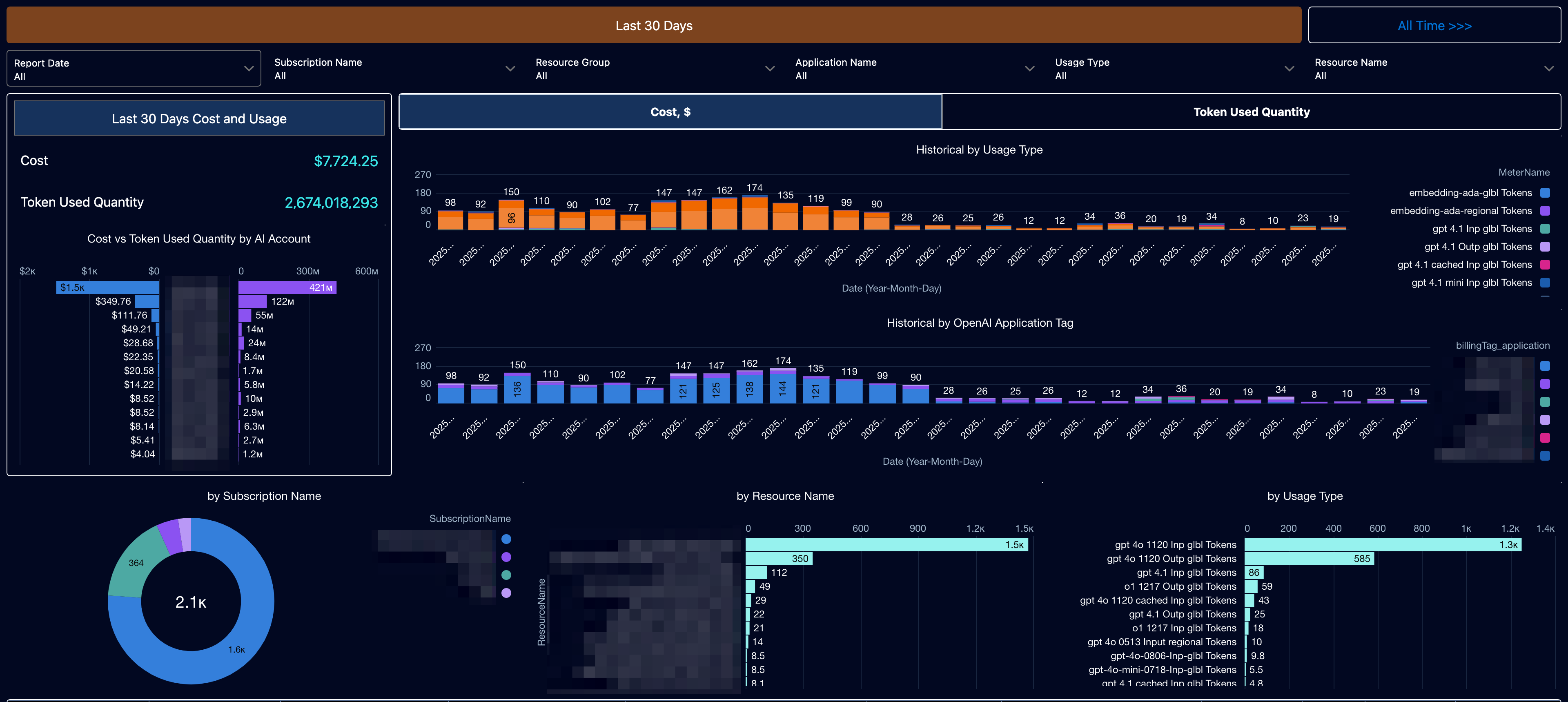
AI cost tracking (Azure OpenAI, plus AWS AI services)
Cloudaware broke down Azure OpenAI costs by token type (input/output) and by AI account, so the team could see what drove spend and where it originated.
For AWS Bedrock and SageMaker, Cloudaware tracked usage and cost trends to support budgeting and allocation.
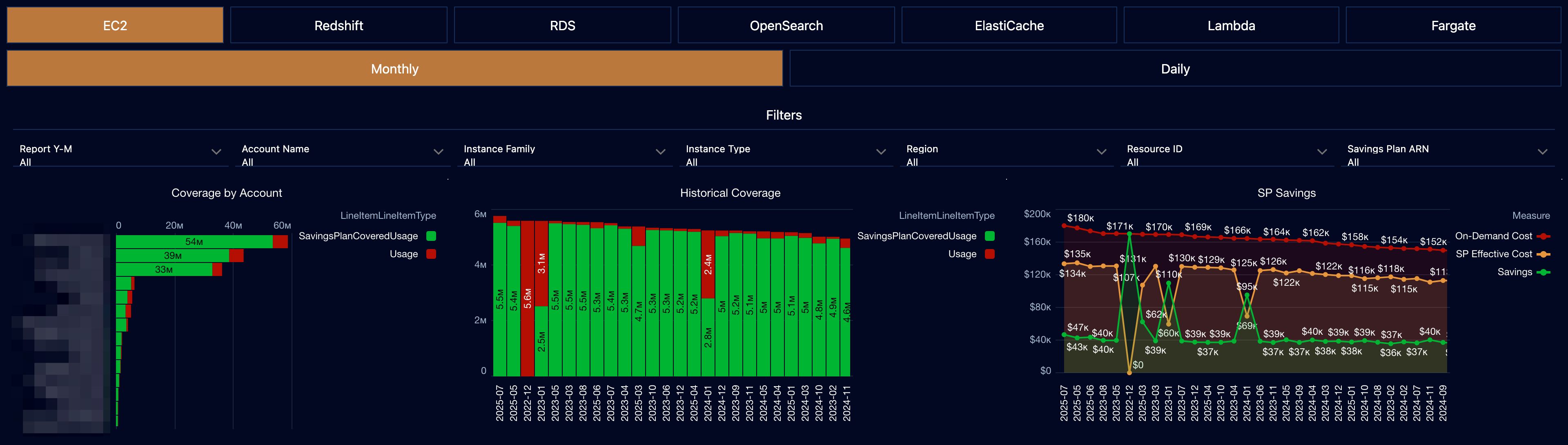
SP/RI optimization with clear coverage signals
Dashboards made SP/RI coverage visible across environments, including active commitments, expired reservations, and underutilized coverage that was not delivering value. This helped the team reduce waste and improve coverage planning.
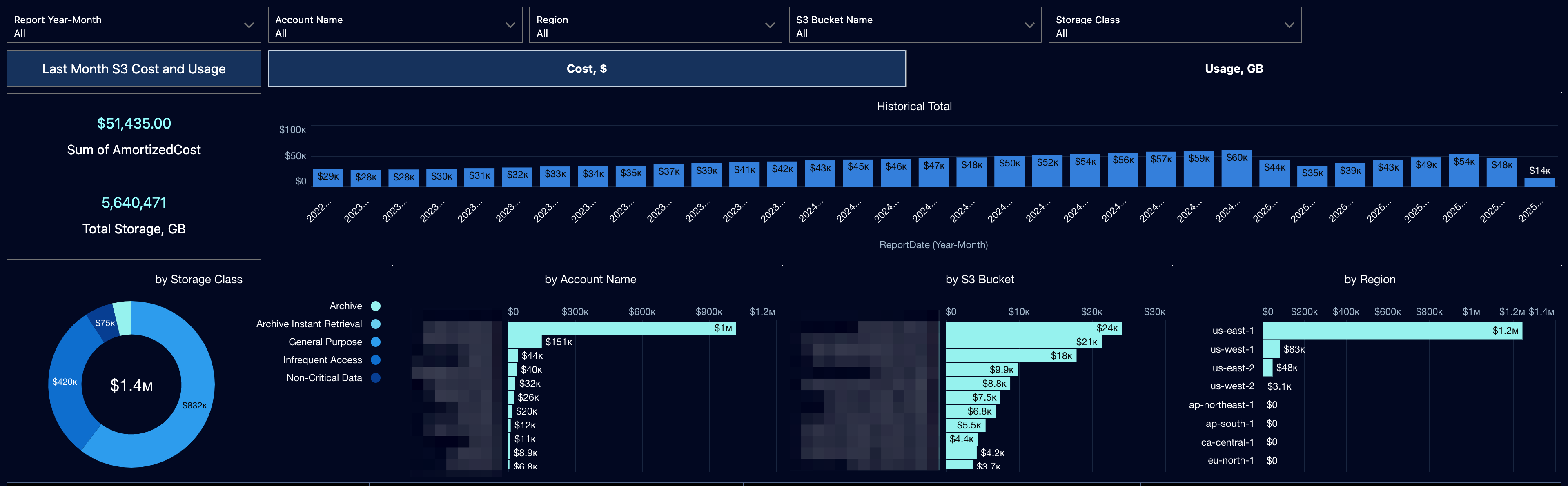
S3 optimization across accounts
Cloudaware identified idle and underused storage across accounts, giving Boeing a clean, repeatable way to scope and execute cleanup.
The output was practical: where the waste sits, how big it is, and which accounts should own the fix.
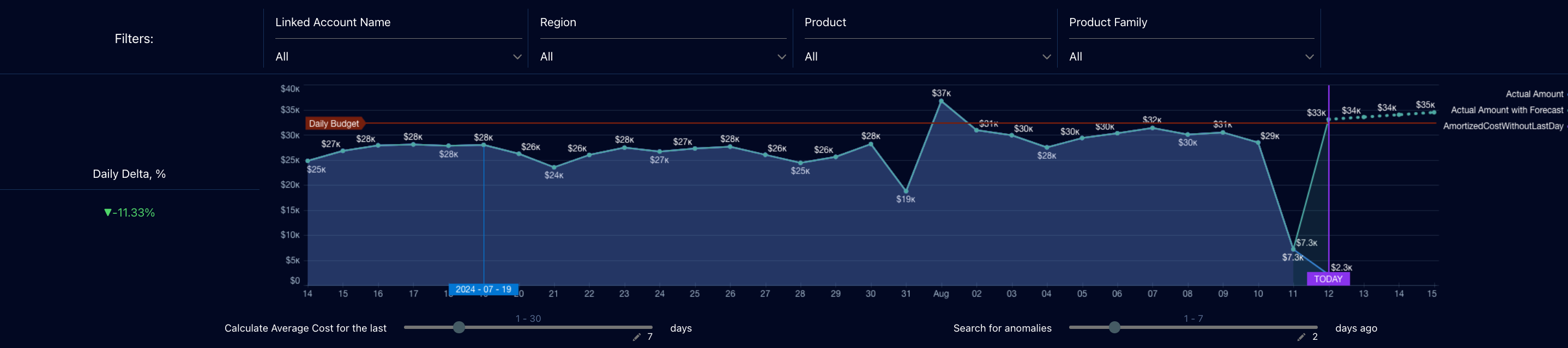
Anomaly detection that reduces “surprise bills”
Cost spikes and drops were flagged automatically, so the team could investigate close to the event, not weeks later. Alerts focused on actionable changes instead of generic variance noise.
Rightsizing that holds up in day-to-day ops
Cloudaware flags over-provisioned instances and provides clear downsizing recommendations, so rightsizing becomes a repeatable routine instead of a one-off clean-up.
Forecasting and chargeback teams can run with
Forecasting is interactive and detailed enough to slice spend by account, business unit, and stakeholder, which makes quarterly planning less dependent on manual rollups.
Chargeback reports are generated by team, project, and business unit, so finance does not have to rebuild the same reports every month and engineering gets fewer back-and-forth questions about allocations.
Implementation
Cloudaware went live at Boeing in a six-week rollout. The focus was to get clean data flowing first, then turn it into dashboards and workflows teams would actually use.
-
Connected billing and usage feeds from AWS, Azure, and GCP through API integrations.
-
Set up token-level tracking for Azure OpenAI so input and output usage could be measured separately.
-
Tailored dashboards for AI usage, S3 optimization, and SP/RI coverage to fit Boeing’s account and environment layout.
-
Built chargeback reporting views for finance and stakeholders based on Boeing’s internal structure.
-
Turned on rightsizing insights for compute and put a regular review cadence around them.
-
Enabled anomaly alerts and forecasting to support monthly reporting and quarterly planning.
-
Trained finance and engineering teams and moved them onto shared reporting and cost-saving routines.
Results
Within 90 days, Boeing tightened visibility and made reporting more predictable:
-
100% visibility into AWS Bedrock, AWS SageMaker, and Azure OpenAI token usage and cost, with separate input and output breakdowns.
-
Monthly chargeback reports delivered on schedule to stakeholders, with fewer follow-up questions.
-
Quarterly forecasts finance could rely on, including stakeholder-level views for review and sign-off.
-
Stronger finance-engineering collaboration because both sides were looking at the same cost drivers and the same scope.
Testimonial
“Cloudaware surfaced insights we just couldn’t see before. From hidden AI costs to storage waste, the platform showed us exactly where to act. It paid for itself almost immediately.”
Marc Schwartz, Lead FinOps Manager, Boeing
Conclusion
Boeing’s FinOps work here is not about “more dashboards.” It is about making multi-cloud and AI spend explainable at the level teams can act on, then wiring that visibility into ongoing controls.
With Cloudaware, Boeing reduced waste across storage and compute, clarified how commitments were actually performing, and brought AI costs into a view that finance and engineering could both use without translation.
Ready to control your multi-cloud budget with the same level of clarity? Schedule a demo to identify savings opportunities across AWS, Azure, and GCP.
Read more case studies:
Faster Audits, Stronger Compliance Case Study
Automating PCI DSS Level 1 Case Study
Compliance Across a Multi-Cloud Setup Case Study
Any questions? Contact sales