



Search for vulnerability testing services and you'll find Astra's $699/year Scanner Lite plan beside Synack's $10,283 human-led pentest. Both prices were checked on October 13, 2026. Synack also lists its required platform separately. The numbers invite comparison. The work doesn't.
A scanner can keep checking known exposures as your environment changes. A pentester can probe authenticated workflows, validate exploitation, and document what happened. Choose the wrong model, and your customer gets a CVE export instead of the scoped pentest they requested. Or you get a one-off report while new cloud assets keep appearing. If you're responsible for vulnerability remediation, either gap becomes your team's problem.
We compared published service scopes, pricing, retest terms, and first-hand customer reviews as of October 2026. We didn't commission these tests ourselves. The logo on the report matters less than what gets tested and who validates the findings. Check what the retest actually covers. Then ask whether those findings reach the team responsible for fixing them.
Key Insights
- Cloudaware — Best for: Bringing vulnerability scanner findings into a multi-cloud CMDB, identifying affected assets and owners, and coordinating remediation.
- Synack — Best for: Enterprise teams needing continuous, human-validated penetration testing and remediation verification.
- Cobalt — Best for: SaaS teams running recurring application pentests with direct tester collaboration and retesting.
- HackerOne — Best for: Enterprise security teams combining crowdsourced penetration testing with researcher coordination and vulnerability triage.
- Bugcrowd — Best for: Organizations needing specialist researchers, customizable penetration testing scopes, and crowdsourced security testing.
- BreachLock — Best for: Security teams needing structured, repeatable pentests with defined manual retests and engineering handoff.
- NetSPI — Best for: Large enterprises managing multiple penetration testing engagements, findings, and remediation through one platform.
- Vumetric — Best for: SMBs and SaaS teams needing scoped, human-led penetration testing, clear reports, and responsive delivery.
- vPenTest — Best for: MSPs running recurring automated internal and external network penetration tests across customer environments.
- Intruder — Best for: Lean security teams monitoring infrastructure, cloud assets, and emerging vulnerabilities through continuous automated scanning.
- Astra Pentest — Best for: SaaS teams combining continuous DAST scanning, autonomous testing, and expert-led penetration testing.
Cloudaware is the publisher of this comparison. Unlike the ten testing providers, Cloudaware is a vulnerability management and CMDB platform, not a human-led penetration testing service.
What are vulnerability testing services?
On a proposal, “vulnerability testing” might describe several very different jobs. Vulnerability testing services are checks a provider runs against an agreed set of targets. The work may stop at automated detection, add expert assessment, or attempt controlled exploitation. NIST SP 800-115 treats discovery and vulnerability validation as distinct activities.
Here's what those service labels usually mean. What actually lands in the report depends on the agreed scope.
| Service type | What you're buying | Who validates and what you receive | When it fits |
|---|---|---|---|
| Managed vulnerability scanning | Recurring automated checks across defined infrastructure or applications | Scanner findings and reports; human confirmation only if included | Infrastructure changes frequently and your team needs ongoing coverage |
| Vulnerability assessment | Scanning plus analysis of identified weaknesses | Analyst-reviewed findings and a prioritized report; exploitation isn't necessarily included | You need a point-in-time risk assessment or audit evidence |
| Penetration testing | Authorized, human-led attempts to exploit weaknesses in a defined scope | Tester-validated evidence, reproduction steps, and a technical report | A customer requires a pentest, or a high-risk release needs deeper testing |
| PTaaS | Human-led pentests delivered and managed through a platform | Findings shared through a portal, often with tester collaboration and contractual retesting | Several applications need regular, independently managed testing |
| Managed VAPT | Ongoing scanning combined with scheduled assessments or penetration tests | Automated findings plus periodic expert reports, depending on the agreement | You need recurring testing but lack a dedicated internal testing team |
You can get a thick assessment report full of findings, severity scores, and exposed endpoints. Then you look for the admin workflows behind SSO. Nothing.
Were the testers given working accounts with the right roles? If not, those authenticated workflows may never have been assessed. That's missing coverage, not a clean result. Before signing, ask for the target inventory, access requirements, sample findings, and verification terms. Those belong in the statement of work, not a sales demo.
This comparison covers work delivered by providers. For test methods, see our application vulnerability testing guide. Running scans yourself? Compare vulnerability management tools instead.
Next, we'll explain how providers earned a place on this shortlist.
How we evaluated vulnerability testing companies and services
One thing shrank this shortlist faster than pricing: reviews about the wrong product. We started with human-led firms, PTaaS providers, and scanner-led services. Then we checked what each buyer actually purchases.
The entry requirement was two substantiated Pros and two Cons from buyers of the relevant service. NCC Group and Rapid7 didn't clear it. Much of Rapid7's available feedback concerns InsightVM, not commissioned penetration testing. Bishop Fox also lacked enough suitable buyer reviews.
Coalfire looked viable until we checked the review dates. Its relevant scanning feedback came from 2017–18. That's too far back to judge what customers receive in 2026. Vumetric and vPenTest filled two places after the same review check.
Questions shaped the comparison: Who does the testing, and who confirms exploitation? What is actually delivered? Then we checked retest clauses, pricing units, and how findings reach remediation workflows. Jira and ServiceNow integrations sound useful.
But will the finding reach someone who actually owns the affected application?
Vendor documentation established the published testing scope and delivery terms. Official pricing pages gave us numbers we could check against the actual purchasing model.
Reviews took more digging.
A glowing G2 review sometimes carries an Incentivized or Seller invite label. That doesn't make the experience false. It does change how much weight we give it. We'd rather find specific details about testing scope or remediation than another enthusiastic five-star rating.
Useful customer accounts also appeared on Capterra, Gartner Peer Insights, and PeerSpot. The reviewer's role mattered as much as the rating. Someone discussing bug bounty payouts isn't necessarily a customer who purchased penetration testing. Those researcher accounts stayed out.
The same problem surfaced with product ratings. A well-reviewed vulnerability scanner tells us nothing reliable about that company's consulting engagements.
Research cutoff: October 2026. Some useful complaints came from 2023–24. They're worth raising with a provider, but they can't establish how its service works today.
This comparison draws on published documentation and customer experiences, not penetration tests we performed ourselves.
Best vulnerability testing services at a glance
Some providers sell expert testing hours. Others sell repeatable scans or automated attack simulations. This comparison shows where the purchase, validation, and remediation workflow actually differ.
| Provider | Testing model | Who validates findings | Retest terms | Pricing basis |
|---|---|---|---|---|
| Synack | Human-led PTaaS for Standard; AI-led and continuous options | Assigned vetted researcher for Standard; researcher teams for longer engagements | Patch verification included; exact request window not publicly specified | From $10,283 per Standard Pentest; required platform billed separately |
| Cobalt | Human-led PTaaS; optional hybrid autonomous testing | Cobalt Core pentesters; expert oversight for autonomous tests | Standard: 6 months; Premium/Enterprise: 12 months, subject to active contract | Annual credits; 1 credit = 8 testing hours. Custom quote |
| HackerOne | Human-led crowdsourced PTaaS | Selected professional pentesters, with Technical Engagement Manager oversight | Essential: 30 days; Premium: 90 days. Unlimited vulnerability retests during the remediation period | Fixed-price engagement based on scope; custom quote |
| Bugcrowd | Hybrid PTaaS: curated human testers with automated tooling | Selected pentesters conducting methodology-driven assessments | Standard: 12 months for web apps, networks, APIs; Plus: all asset types. One report update included | Fixed-price Standard projects or custom-scoped subscriptions; quote required |
| BreachLock | Human-led PTaaS; optional automated security validation | In-house certified penetration testers | Standard: 1 free manual retest; Extended: 2; Extensive: custom. Automated retesting available separately | Custom pentest quote. Separate Security Validation from $2,500 is older seller-supplied G2 pricing, |
| NetSPI | Human-led enterprise PTaaS | NetSPI security testers; expert-managed findings | Retest requests tracked in platform; coverage depends on statement of work | Custom quote based on engagement scope and testing program |
| Vumetric | Human-led penetration testing and PTaaS | In-house pentesters; findings peer-reviewed by specialists | Retests requested through PTaaS portal; included window and scope require confirmation | Custom quote by target and engagement scope |
| vPenTest | Hybrid: automated network pentesting with human report QA | Automated exploitation checks; security consultants review reports | Scheduled and on-demand repeat tests; no public manual-retest inclusion terms | Custom subscription quote; licenses based on test targets/IPs |
| Intruder | Scanner-led managed vulnerability scanning | Automated scanning engines; separate expert testing services available | On-demand remediation scans; manual penetration retesting not included in scanner subscription | Cloud/Pro: base subscription plus fee per target; Enterprise custom |
| Astra Pentest | Hybrid: scanner-led DAST plus optional expert pentesting | Scanner Lite: automated; Pentest Expert: certified human pentesters | Scanner Lite: automatic rescans; Pentest Expert: 2 expert rescans within 30 days | Scanner Lite: $699/year, 1 target, 3 scans/month; Pentest Expert: $5,999/year |
Pricing reflects published entry offers or purchasing models, not equivalent testing scopes. "Custom quote" means no comparable public amount was verified. Retest conditions and integration access may depend on the contract or tier.
Best vulnerability testing companies (2026)
The vulnerability testing companies below take different approaches to human-led security assessments. Some assign one pentester to a defined scope. Others bring in researcher teams or combine manual testing with automation.
What separates them becomes clearer when you examine the actual engagement, not the service label.
Synack — Best for enterprise human-validated PTaaS
Synack is worth a closer look when one annual penetration testing report no longer covers your release calendar. Its appeal isn't simply access to vetted researchers. You can buy a tightly scoped engagement or give a team more time to investigate.
Best for: Enterprise security leads coordinating recurring, human-validated tests across multiple applications and infrastructure targets.
G2: 4.8/5 from 21 reviews, checked October 13, 2026.
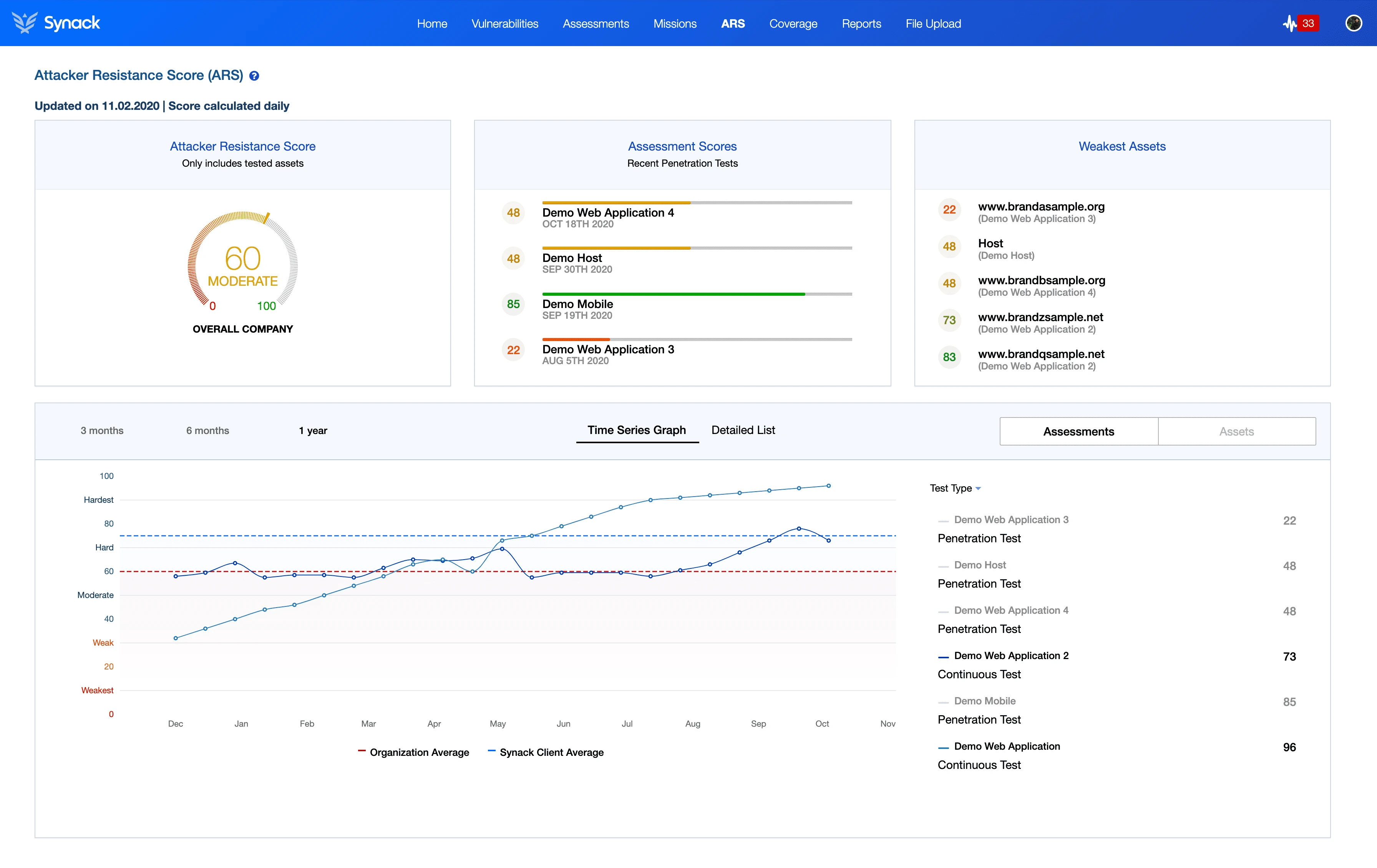
Synack offers several ways to buy human-led testing. SynackST Standard Pentest assigns one vetted researcher to five days of checklist-driven testing. Synack14 instead brings in a team for a 14-day discovery window. Continuous programs extend the timeline further, while Sara adds AI-led testing. Those formats change what you're actually buying. For a customer-mandated check on one application, a bounded assignment may be enough. For several exposed entry points, one researcher over five days may be the wrong starting assumption.
Say three apps are queued for customer reviews. One has ordinary login; another needs SSO roles; the third exposes authenticated APIs. Scope those as separate access problems, not three names in a spreadsheet. Synack's platform brings findings, researcher communication, and reports into one workflow. Its Vulnerability Operations team reviews submitted findings before they're passed along. That gives engineering a clearer starting point for remediation and patch verification. Still, I'd ask who supplies accounts and handles internal network access before signing. Small access gaps can consume a short testing window.
Features
- Two ways to staff the test: SynackST assigns one vetted researcher; Synack14 uses a team over 14 days. That matters when you're comparing narrow compliance coverage against broader exploration.
- Internal, web, and API scopes: Supported targets include applications, hosts, and APIs. Authenticated testing needs working accounts, suitable roles, and agreed access before kickoff.
- Human validation: Synack's Vulnerability Operations team reviews reported issues. Engineering gets findings that have passed triage rather than an unfiltered stream of scanner alerts.
- Evidence engineers can use: Findings include technical reproduction details and remediation guidance. The platform also supports reports suited to security reviews and individual asset owners.
- Patch verification: After a fix, request a researcher check. Ask how long that option remains available under your contract.
- Ticket handoff: Jira, ServiceNow, and API integrations can move findings toward engineering. Your team still needs rules for assignment and ownership.
Pros & Cons
Pros
✅ Exploit reproduction and remediation detail: “The pen test results that come out of the service are very robust and always accompanied with detailed documentation enabling our teams to recreate the vulnerability.” Scott S., VP / Deputy CISO, G2, April 6, 2026
✅ Engineering-ready explanations: “I appreciate that Synack explains exactly how each flaw was exploited and provides a full detailed explanation on how to remediate the flaw.” Todd E., G2, April 6, 2026
Cons
⚠️ Internal applications require additional setup. “It's more difficult to execute tests of internal applications that aren't exposed to the internet, though this is to be expected.” Scott S., VP / Deputy CISO, G2, April 6, 2026
⚠️ API and multi-account scoping complexity. “The setup is easy for the most part, but can get a little more complicated when API and/or multiple testing accounts are involved.” Todd E., G2, April 6, 2026
Differentiator
The real choice isn't simply whether to use a human tester. Synack lets teams choose how many researchers and how much testing time they buy. That makes repeatable PTaaS attractive for enterprises juggling several engagements. It also puts pressure on scoping: pick the wrong format, and the included effort may not match your targets.
There's also a procurement wrinkle this year. Synack and NetSPI announced their merger on September 2, 2026; it closed in October 2026. Their service models, platforms, and existing agreements remain separate for now.
Cobalt — Best for recurring application penetration testing
A pentest slot is booked. Then a release slips, and the API scope doubles. That's where an annual testing plan starts getting uncomfortable.
Cobalt is built for teams that need penetration testing more than once a year. Its PTaaS offering combines Cobalt Core pentesters with a platform for live findings and follow-up. What caught my attention was the billing model. You're reserving testing capacity through credits, not buying unlimited access to testers.
Best for: SaaS security teams running repeated application pentests, especially when engineers need to question findings and verify fixes.
G2: 4.5/5 from 180 reviews, checked October 13, 2026.
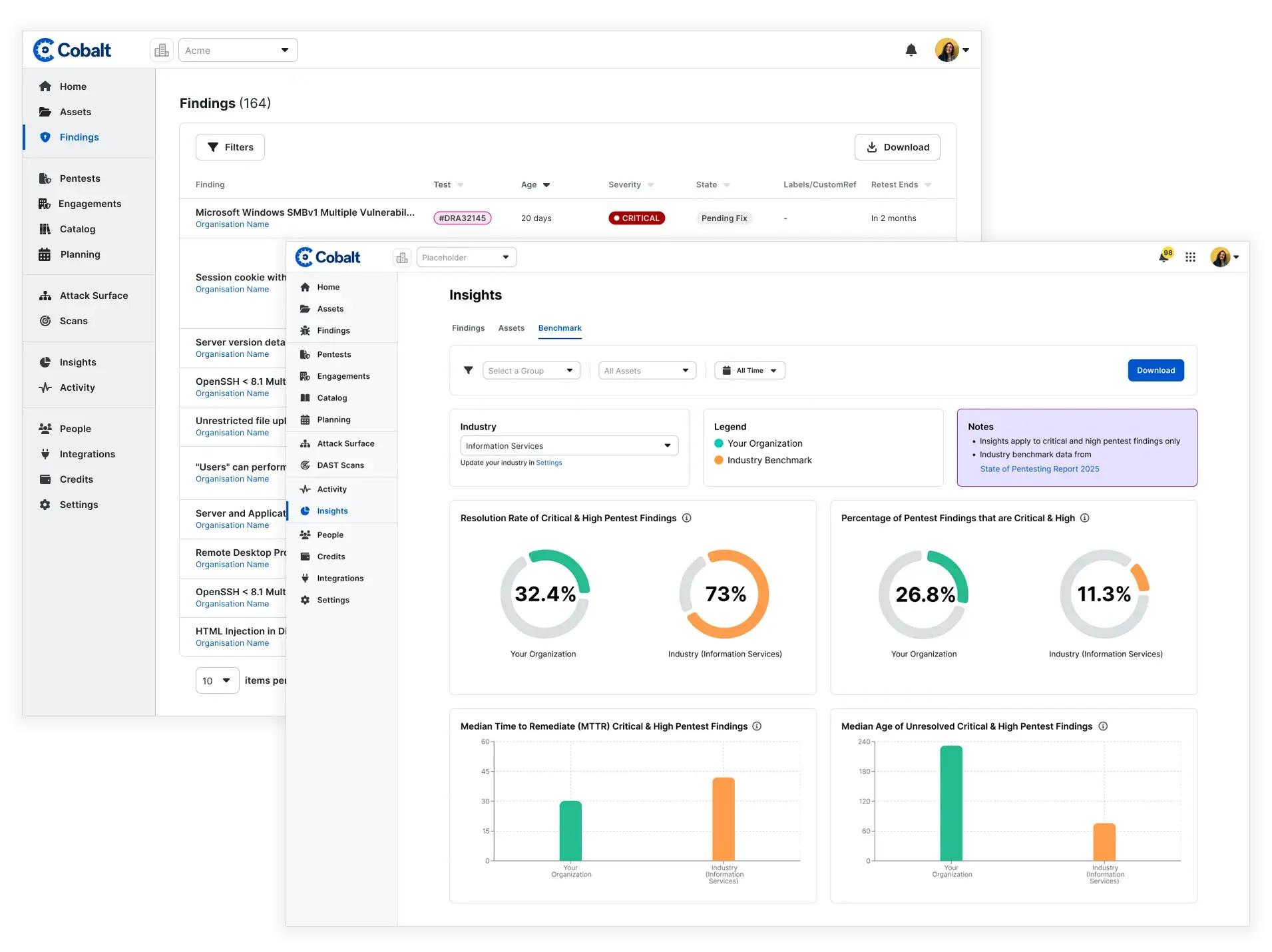
Picture an engineer staring at an authorization finding they can't reproduce with their test account. With Cobalt, that question can go back to the pentester while the engagement is still active. Findings arrive during testing, rather than appearing only in the final report. Once engineering ships a fix, the same workflow supports retesting.
That handoff is the attraction. But the testing calendar can still cause trouble. A delayed release may need a new slot, and narrowly scoped jobs don't always sit comfortably inside credit packages. I'd ask about both before committing an annual budget.
Features
Start with the scope, because that's where a repeat engagement can go sideways. Cobalt accepts defined URLs, IPs, and testing instructions. Web applications and APIs can be included where the agreed methodology and access permit. If authorization matters, check the test accounts and roles before the pentester starts.
Who gets assigned? Human-led engagements use vetted Cobalt Core specialists, matched to the requested work. Higher tiers offer additional scheduling options. Findings surface while those testers are working, with room for engineering questions and reproduction details. That's much easier to act on than a report arriving after the sprint closes.
The other half starts after the fix. Teams submit findings for retesting and track remediation in the platform. Jira, GitHub, ServiceNow, and other integrations support handoff, although access can vary by tier. Cobalt also offers Autonomous Pentest, using AI-driven execution under Cobalt Core oversight. Treat its coverage as a separate testing choice, not a cheaper label for human-led work.
Pros & Cons
Pros
✅ Actionable findings engineers can work with: “Cobalt provides practical, real-world pentesting with actionable findings that are easy for engineers to understand and fix.” Arpit G., Senior Staff Software Engineer · G2 · April 27, 2026 · Original review
✅ Visibility before the final pentest report: “The platform provides clear visibility into vulnerabilities as they’re discovered, real-time collaboration with pentesters, and an organized dashboard for tracking remediation.” Verified User in Computer Software · G2 · October 16, 2025 · Original review
Cons
⚠️ Less flexibility for narrowly scoped tests: “Pricing and scoping can feel less flexible for smaller or narrowly focused tests, and tester availability can vary depending on timing and skill set.” Arpit G., Senior Staff Software Engineer · G2 · April 27, 2026 · Original review
⚠️ Reporting customization and scheduling constraints: “The reporting and dashboard visuals could be more customizable, and the scheduling process sometimes feels rigid if timelines shift.” Verified User in Computer Software · G2 · October 16, 2025 · Original review
Differentiator
Cobalt's clearest advantage appears between engagements. Testers can move on, but findings, conversations, and retest requests stay in one workflow. Annual credits give security leads a way to budget that recurring work.
Still, I'd hesitate if the plan contains one small assessment and little else. Buying capacity only pays off when the team actually uses it.
HackerOne – Best for crowdsourced penetration testing
A large researcher community sounds impressive. It feels less impressive when five reports describe the same authorization bug.
HackerOne is interesting for what happens between a researcher finding something and an engineer fixing it. Outside testing capacity is the draw. Sorting and delivering those findings is the harder job.
Best for: Enterprise AppSec teams buying scoped penetration testing services alongside ongoing researcher-driven programs.
G2: 4.5/5 from 105 reviews, checked October 13, 2026.
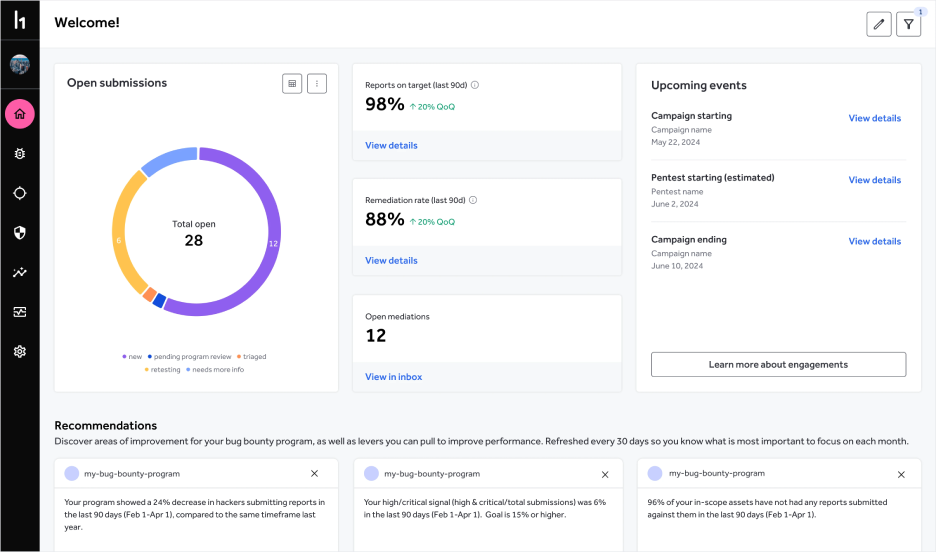
First, separate two purchases that sound similar. H1 Pentest's PTaaS model puts selected professional testers against agreed targets, with a Technical Engagement Manager coordinating delivery. Bug bounty programs invite eligible researchers under different rules. If procurement needs a scoped pentest report, an active bounty program doesn't automatically satisfy that request.
I'd pay particular attention to the report queue. One researcher finds an authorization bypass; another reports the same weakness through a different request. Sometimes the second report proves another attack path. Sometimes it's duplication. HackerOne offers validation and deduplication across its platform, but the purchased program determines what's included. That is worth asking before anyone promises engineering a clean handoff.
Features
- HackerOne's scoping process records targets, testing methods, credentials, and restrictions. Web apps, mobile apps, APIs, and external infrastructure can qualify, depending on the engagement. A Technical Engagement Manager handles coordination, while selected pentesters handle the actual testing.
- Once findings start arriving, the duplicate queue becomes the interesting screen. Can you see which reports were merged, validated, or passed to engineering? I'd ask to see that working, not just described on a sales slide.
- There's also the ticket itself. Jira, GitHub, GitLab, and ServiceNow integrations are documented. But can the developer assigned to a fix actually open the reproduction evidence? Ask for a sample ticket and final report. HackerOne also supports attestations for security reviews.
- If engineering misses its sprint deadline, the retest clock starts to matter. Essential gives 30 days; Premium gives 90. Both include unlimited vulnerability retest requests inside their respective windows. That benefit is worth less when the fix lands after coverage expires.
Pros & Cons
The reviewer's role mattered more to me than the star rating here. The Gartner reviewers below describe buying security services, not collecting bug bounty payouts. Their experience also covers HackerOne's wider researcher programs, not just commissioned pentests.
Pros
✅ Researcher capacity for continuous security testing: “The platform gives us access to a large pool of researchers for continuous testing that would otherwise be extremely difficult to reproduce in-house.” Verified enterprise reviewer · Gartner Peer Insights · July 17, 2026 · Original review
✅ Actionable findings with fewer duplicate reports: “HackerOne has improved our overall application security program by providing us with actionable findings and reducing duplicated reports.” IT Security & Risk Management Associate, Media · Gartner Peer Insights · March 30, 2026 · Original review
Cons
⚠️ Finding the right report can take extra work: “The user interface can sometimes be difficult to navigate, especially when searching for specific reports.” Verified enterprise reviewer · Gartner Peer Insights · July 17, 2026 · Original review
⚠️ Engagement permissions historically required repetitive setup: “I would like to see a group that can just be added vs individual users each time that manage the pentests.” William T., Senior Product Security Engineer · G2 · November 25, 2024 · Original review
Differentiator
HackerOne is attractive when external researchers are part of your security program, not just your annual audit. H1 Pentest adds a defined engagement to that wider platform. Triage can reduce duplicate work, provided your package includes the relevant service.
I'd judge it by the quality of the handoff, not the size of the crowd. Ask for a sample finding that survived validation and made it into an engineering ticket.
Bugcrowd — Best for customizable crowdsourced penetration testing
A web app pentest sounds straightforward until the scope includes partner permissions, payment flows, and restricted testing hours.
Suddenly, finding someone available isn't enough. You need researchers who've dealt with those problems before.
That's the case I'd consider Bugcrowd for. Its CrowdMatch system helps select testers around the actual assignment. The question is whether that specialist coverage justifies moving beyond a standard engagement.
Best for: Security teams needing crowdsourced PTaaS, specialist pentesters, and flexibility across applications, APIs, or less conventional targets.
G2: 4.3/5 from 61 reviews, checked October 14, 2026.
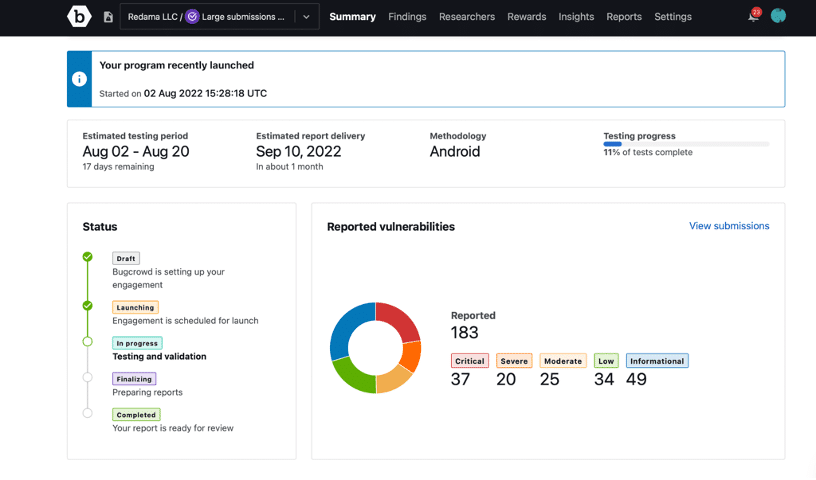
Image source: Bugcrowd Pen Testing Dashboard
Bugcrowd doesn't sell every pentest through the same model. Standard follows a defined methodology with a fixed project scope. Plus gives buyers more control over tester qualifications, scheduling, and unusual targets. Max goes further with continuous or on-demand testing.
For a normal external application, Standard may cover the job. But imagine a payment workflow spanning several user roles and an API accessible only through a partner account. I'd want the proposal to name those paths explicitly. CrowdMatch helps assemble researchers with relevant skills, but it cannot compensate for missing access or an incomplete scope.
Once testing starts, the Pen Test Dashboard tracks milestones and reported vulnerabilities. Bugcrowd uses its Vulnerability Rating Taxonomy (VRT) to classify findings.
That's useful. Still, I'd open a sample finding before signing. Does it show enough evidence for an engineer to reproduce the issue? Or will the first remediation meeting become another round of questions?
Features
- CrowdMatch assembles pentesters around the engagement's technical requirements. For a common web application, the Standard methodology may be enough.
- Specialized targets change the buying decision. Plus accommodates custom scopes, particular tester qualifications, and restrictions on testing time or location. Hardware, IoT, and operational technology can also require additional arrangements. Don't assume those fit the Standard quote.
- During testing, the Pen Test Dashboard shows milestones and incoming findings. VRT helps classify vulnerabilities. But classification and a developer-ready fix aren't necessarily the same thing.
- Bugcrowd supports Jira, GitHub, APIs, and webhooks. Its Jira integration can create tickets and synchronize updates. That sounds convenient until the connection refuses to cooperate. One buyer describes exactly that problem in the reviews below. A sample ticket would tell me more than another integration logo.
- And don't overlook what happens after engineering fixes an issue. Standard includes 12 months of retesting for web apps, networks, and APIs, with one report update. Plus extends that coverage to all supported asset types, also with one report update.
That final report update matters when different teams finish their fixes months apart.
Pros & Cons
These reviews concern the broader Bugcrowd Platform, including crowdsourced security programs. They describe customer experiences, not researcher complaints about bug bounty payouts.
Pros
✅ Access to skilled researchers: “I like having access to a diverse and skilled community of security researchers in Bugcrowd, which provides high-quality, real-world vulnerability findings.” Mariam A., Senior Software Development Engineer · G2 · December 14, 2025 · Original review
✅ Security testing without an internal pentesting team: “I appreciate Bugcrowd because it provides a reliable platform for conducting security testing without requiring an in-house team of hackers.” Verified User in Information Technology and Services · G2 · November 18, 2025 · Original review
Cons
⚠️ Findings can need further clarification: “Some reports may still require additional clarification or back-and-forth before remediation, which can slow down resolution.” Mariam A., Senior Software Development Engineer · G2 · December 14, 2025 · Original review
⚠️ Jira integration can take extra effort: “One of the most difficult things to use was trying to get the integration with our Jira working properly.” Ben Gurney, Senior Engineering Manager · PeerSpot · November 27, 2025 · Original review
Differentiator
I'd consider Bugcrowd when the test needs more than a predefined methodology and a general-purpose pentester.
The real advantage is matching researcher skills to unusual testing requirements. Plus supports specialized targets, scheduling restrictions, and custom reporting. Max takes that further with continuous testing and researcher-driven discovery.
For a straightforward external pentest, those options may be unnecessary. I'd compare Standard first, then pay for customization only where the scope justifies it.
BreachLock — Best for structured, repeatable penetration testing
A pentest can finish on Friday. Monday brings findings, an audit deadline, and engineers asking what needs fixing first. That's where I'd judge BreachLock. Its PTaaS pairs in-house pentesters with a system for reporting vulnerabilities and tracking remediation. Unlike crowdsourced services, BreachLock says its testers work directly for the company.
Best for: Security leads buying scoped penetration testing services who need technical reports, engineering handoff, and defined manual retests.
G2: 4.6/5 from 38 reviews, checked October 14, 2026.
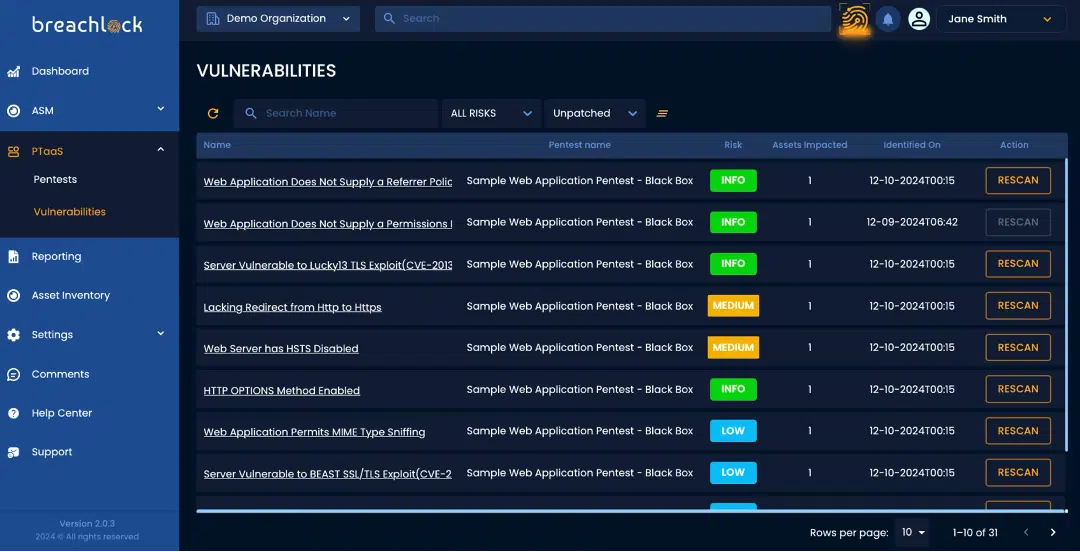
Image source: BreachLock PTaaS Vulnerabilities Dashboard
BreachLock's Standard package covers smaller web applications and basic networks. Extended reaches more complex apps, APIs, and network environments. Extensive targets larger engagements and offers customized reporting and specialist options. These are scope differences, not three public price points.
What happens after testing matters just as much. A developer may need proof that an authorization flaw is reproducible. Someone else needs to explain the same issue to an auditor. BreachLock offers separate technical and executive reports, with findings available through its platform when selected. I'd request a sample report and an actual Jira ticket before signing. A portal screenshot alone won't show whether engineers can follow the evidence.
Features
- The first conversation should be about access. Can BreachLock's in-house testers reach internal hosts and authenticated APIs? What does the pentest checklist exclude? The company documents OSCP- and CREST-qualified testers and agreed testing scopes.
- Human-led testing doesn't mean every early step is manual. Automation assists reconnaissance, while specialists investigate exploitation and business-logic flaws. BreachLock says its team validates findings. Ask how disputed issues get resolved before the report is finalized.
- Reports serve different audiences. Engineers need reproduction details; compliance teams need evidence of coverage. Higher packages add report walkthroughs and more customization. The platform can display findings during an engagement, but access is optional for professional-service packages.
- Jira, ServiceNow, and other DevSecOps integrations are documented. I'd check which connectors actually come with the quote. One reviewer's Jira experience was positive. That doesn't guarantee painless setup for the next buyer.
- Retesting needs a separate line in the agreement. Standard includes one free manual retest, Extended two, and Extensive a negotiated number.
- BreachLock also advertises unlimited automated retesting. Those aren't interchangeable. An automated check isn't necessarily another full manual assessment.
Pros & Cons
The review dates deserve attention here. These four excerpts come from three buyers in 2023–2024. They describe actual engagements, but can't establish how the service performs today.
Pros
✅ Clear communication throughout the engagement: “From the initial consultation to the final report, the team was communicative, thorough, and provided valuable insights into the security of our web application.” Towhid C., IT Security Manager · G2 · August 22, 2023 · Original review
✅ Jira-linked remediation: “Each vulnerability has its own description and remediation suggestions, and each one generates its own task in Jira through the supplied Jira integration.” Will H., Director of IT · G2 · April 9, 2024 · Original review
Cons
⚠️ Slow handling of false-positive exceptions: “Their UI system is okay, but what I dislike the most is how slow their system can be when filing any false positives / exceptions for some of their findings.” Verified User in Religious Institutions · G2 · June 5, 2024 · Original review
⚠️ Delays answering portal questions: “Sometimes it took a day or two to get responses to questions about the admin portal. But those answers were helpful when they arrived.” Will H., Director of IT · G2 · April 9, 2024 · Original review
Differentiator
BreachLock's distinction is practical: certified in-house pentesters, structured engagement scopes, and defined manual retest allowances.
That's different from buying testing capacity through an open researcher community. It's also different from subscribing to an automated scanner.
For a security lead handling recurring customer assessments, the combination may fit well. But I'd compare the included retests and reporting terms before selecting a package.
The deciding factor is what happens after the initial findings, not just how quickly the pentest starts.
NetSPI — Best for managed enterprise penetration testing programs
Three product teams want pentests before their next release. Compliance needs last quarter's reports. Meanwhile, engineering still has open vulnerabilities from earlier assessments.
That's the kind of workload where NetSPI starts looking useful.
Its PTaaS combines in-house security consultants with a platform for managing engagements, findings, and remediation. The appeal goes beyond getting another application tested. It's keeping the testing history accessible when different teams need answers months later.
Best for: Enterprise security teams managing recurring penetration testing services across applications, networks, APIs, and cloud infrastructure.
G2: 4.9/5 from 13 reviews, checked October 14, 2026.
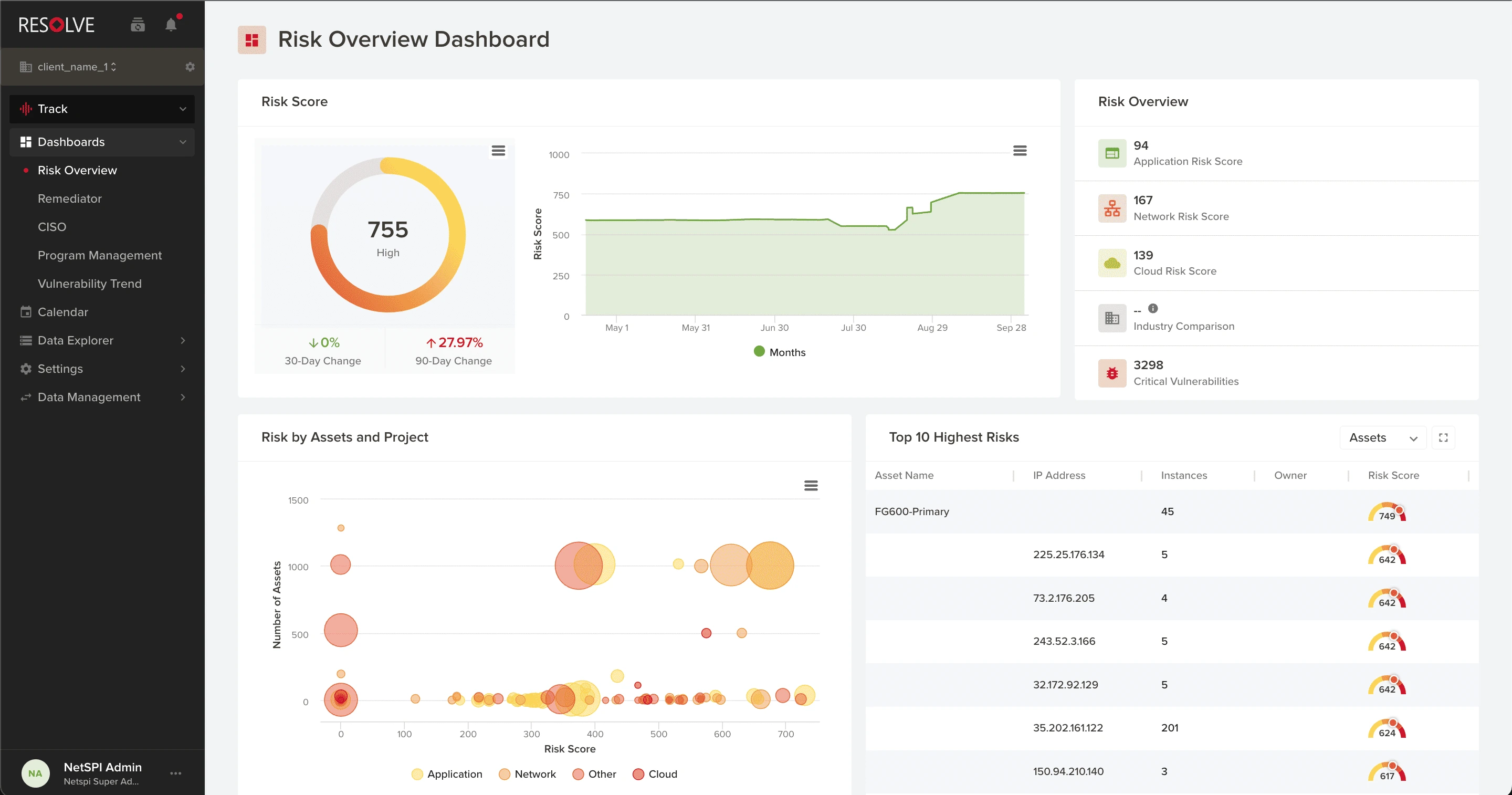
Image source: Official NetSPI Platform demo
NetSPI uses its own security consultants rather than sourcing testers through an open researcher marketplace. Human-led assessments cover applications, networks, and other agreed targets. Automation supports the work, but specialist testing remains central to the engagement.
The more interesting part comes when findings start overlapping.
Say a pentest identifies an authorization problem affecting several application components. One team owns the API. Another maintains the underlying infrastructure. Security needs to explain the risk without losing the technical evidence.
NetSPI's platform keeps findings, communication, reports, and remediation activity together. That gives teams somewhere to return when a vulnerability needs clarification or verification.
But I'd inspect how the report identifies affected assets. One older customer review raises exactly that concern. A technically correct finding isn't especially helpful when nobody can identify the impacted system.
Features
- NetSPI keeps testing activity and findings accessible through its platform. That's valuable when an auditor asks about a vulnerability discovered two assessments ago.
- The actual testing is consultant-led. Application penetration testing covers web, mobile, and API environments, depending on scope. Authenticated applications need appropriate accounts and user roles. I'd confirm those before booking testing time.
- Findings become available during the engagement. Testers can provide reproduction evidence and discuss individual issues with the customer's team. That avoids waiting until the final presentation to resolve unclear findings.
- NetSPI also connects vulnerabilities with assets and remediation records. Its platform supports tracking findings across separate assessments. For complex environments, I'd ask to see one issue affecting multiple systems.
- Then check the engineering handoff. Jira and ServiceNow integrations are documented. Can an engineer open the complete finding without requesting another export?
- Retesting is available through NetSPI's remediation workflow. However, the public documentation doesn't establish one universal manual-retest allowance. The statement of work needs to specify verification scope, turnaround, and cost.
Pros & Cons
I paid particular attention to comments about testing quality and findings management. Those matter more here than general praise for the interface.
The reviews come from different years and aren't equally current. The oldest complaint, from 2023, is worth checking against today's reporting workflow.
Pros
✅ Collaborative human-led testing: “The project went smoothly, the pentester engaged well with our team and it was fairly priced.” Verified Gartner Reviewer, Engineering, Banking · Gartner Peer Insights · June 26, 2025 · Original review
✅ Findings beyond the obvious attack surface: “Penetration tests have surfaced hidden corners of our infrastructure that are easy to overlook.” Verified User in Transportation/Trucking/Railroad · G2 · April 23, 2026 · Original review
Cons
⚠️ New platform features can need refinement: “The new features rolled out are immature, but are moving in the right direction.” Jake B., Application Security Engineer · G2 · April 28, 2026 · Original review
⚠️ Affected devices weren't always identifiable: “Some items on our vulnerability report were not clear to which devices were impacted by the vulnerability.” Verified User in Hospital & Health Care · G2 · November 16, 2023 · Original review
Differentiator
NetSPI makes more sense when several pentests need to operate as one managed program.
Its advantage is consultant-led testing connected to a shared findings and remediation platform. PTaaS Stream adds recurring capacity without buying each assessment separately.
The trade-off is scheduling. One active Stream engagement may not be enough for several teams with overlapping release deadlines.
I'd compare NetSPI against other PTaaS providers using actual testing capacity, not just the number of available pentesters.
Vumetric — Best for scoped, human-led penetration testing
A customer wants a pentest report before signing. Your engineering team has two weeks, limited testing access, and no appetite for another lengthy procurement cycle.
That's the kind of assignment where Vumetric deserves a look.
Vumetric takes a specialist-led approach to penetration testing services. You agree on the scope, its in-house testers perform the assessment, and the team delivers technical findings.
What stands out is the straightforward purchasing process. There's even a self-service quoting tool for teams that already know what needs testing.
Best for: SMB and SaaS security leads needing scoped penetration testing, clear technical reports, and responsive engagement coordination.
G2: 4.8/5 from 20 reviews, checked October 14, 2026.
Gartner Peer Insights: 4.7/5 from 10 ratings
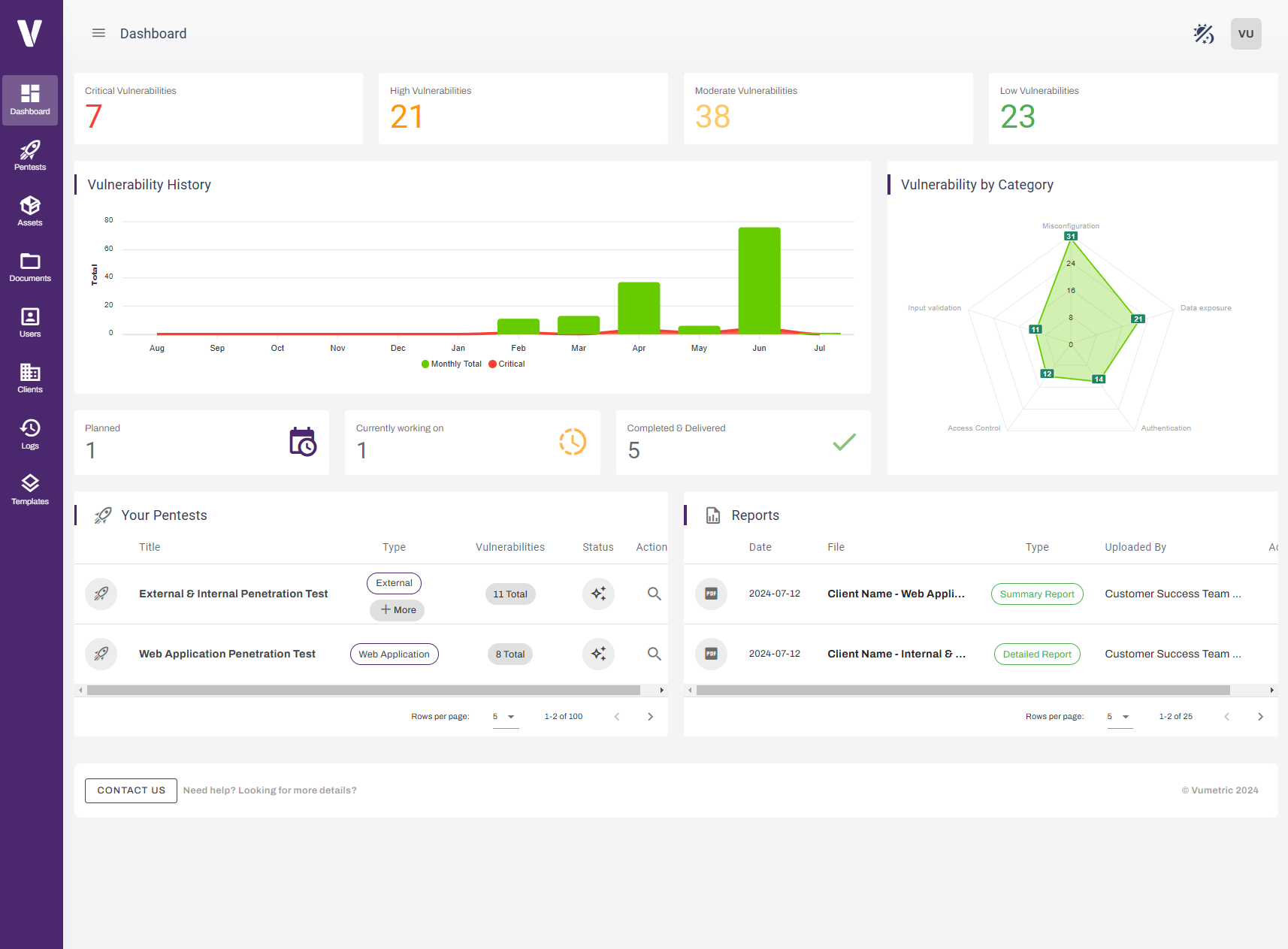
Image source: Vumetric PTaaS Platform
Vumetric's model feels closer to working with a specialist consultancy than buying access to a large researcher marketplace. Its in-house pentesters handle the agreed assessment, combining manual exploitation techniques with automated checks. Findings undergo expert peer review before reporting.
The scope can include networks, web applications, APIs, mobile applications, or cloud infrastructure. But don't mistake that coverage for an all-inclusive test. A quote for external infrastructure won't automatically include your authenticated application workflows.
Here's where I'd spend time during scoping. Say your SaaS application handles customer accounts, permissions, and payment operations. Does the proposal identify the user roles testers need? Will they examine authorization between accounts, or only test public endpoints?
Those questions matter more than the number of vulnerabilities promised in a report.
Features
- Vumetric's web application testing combines manual investigation with automated tools. Testers can examine business logic and attempt controlled exploitation. For an application with complicated account permissions, I'd specify those workflows before kickoff.
- The company also handles internal and external network assessments. API, mobile, and cloud testing are available through separate engagement scopes. This makes Vumetric useful when several environments need testing, but not necessarily under one contract.
- Its PTaaS platform adds a practical layer to traditional consultancy work. Customers can request projects, monitor progress, communicate with specialists, and review previous assessments. That history becomes useful during the next testing cycle. Instead of hunting through old PDFs, security can compare reported weaknesses across engagements.
- Reports are another selling point. Vumetric documents technical findings, recommended fixes, executive summaries, and available compliance attestations. I'd request a sample for both engineering and the customer demanding the assessment. After remediation, customers can request retesting through the portal. But I'd check the coverage before relying on it.
Pros & Cons
The review sample needs context before treating these observations as current buying advice. All four excerpts come from two small-business customers, Alex P. and Max L. Both reviewed Vumetric in early 2024.
Neither review carries an Incentivized label. G2 identifies both as Organic. Their experiences are useful, but this isn't a broad or recent customer sample.
Pros
✅ Clear assessment reports and regular updates: “Thorough and clear reports post testing. Updates communicated frequently during testing process.” Alex P., Small Business · G2 · April 4, 2024 · Original review
✅ Responsive testing when deadlines change: “When a deadline moved up suddenly, Vumetric was able to satisfy our rush needs fully and efficiently.” Max L., Small Business · G2 · January 19, 2024 · Original review
Cons
⚠️ Limited severity coverage during retesting: “Remediation testing only covers critical and high priority issues - would be helpful if this covered more issue categories by default.” Alex P., Small Business · G2 · April 4, 2024 · Original review
⚠️ Initial discovery could explore the environment more deeply: “Their questions don't dive as deeply into our platform as other cybersecurity providers I've spoken with.” Max L., Small Business · G2 · January 19, 2024 · Original review
Differentiator
Vumetric stands out for its specialist-led delivery and relatively straightforward procurement process.
You can scope a focused assessment, request a tailored quote, and work directly with an in-house testing team. The PTaaS portal adds progress tracking without making the engagement feel like a complex enterprise program.
I'd favor Vumetric when the scope is clear and expert execution matters more than researcher scale.
For a large continuous testing program, compare capacity and retesting terms carefully. A responsive one-off pentest doesn't automatically mean unlimited ongoing coverage.
vPenTest — best for recurring automated network penetration testing
Your MSP manages 30 customer networks. Each needs regular penetration testing, but booking a consultant for every monthly assessment would quickly become unmanageable. That's the problem vPenTest tackles.
Developed by Vonahi Security, now part of Kaseya, vPenTest automates internal and external network penetration testing. You schedule assessments, review simulated attack paths, and download reports without arranging a fresh manual engagement each time.
Best for: MSPs and IT security teams running repeatable network pentests across multiple environments, especially when testing frequency matters.
G2: 4.6/5 from 247 reviews, checked October 14, 2026.
Gartner Peer Insights: 4.6/5
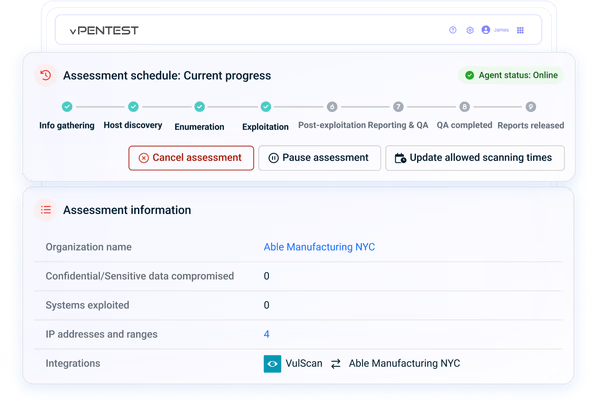
Image source: Kaseya vPenTest product interface
vPenTest takes techniques commonly used in manual network pentests and turns them into a repeatable automated process. It goes beyond listing missing patches. The platform attempts exploitation, checks attack paths, and records whether weaknesses can lead to further compromise.
That makes it useful for regular network assessments. But this isn't a consultant-led application pentest. A security specialist isn't manually investigating every business-logic flaw or unusual authorization path.
For an MSP, the attraction is operational. Customer environments live in one multi-tenant portal. You can schedule assessments, review findings, and prepare reports without opening a new consulting project for each client.
The uncomfortable part comes when automation reaches its limits. A flagged exploit may need human context before anyone calls it a confirmed business risk. That's where the product's recurring coverage and a specialist pentest serve different jobs.
Features
- External tests can assess reachable public targets. Internal assessments require a vPenTest agent, deployed inside the target network. It's a VM or device that connects to Vonahi's testing infrastructure. That matters for customers with several offices or segmented networks. Check connectivity and agent placement before promising a single assessment will cover everything.
- Testing itself is automated. vPenTest simulates attacks, attempts exploitation, and records network activity. You can schedule recurring assessments or run additional tests when infrastructure changes.
- Now consider an MSP managing several customer environments. The multi-tenant portal keeps customer organizations, assessments, and reports separate. That's easier than maintaining individual testing accounts and spreadsheets for each client.
- The useful integration here is VulScan. It brings vulnerability findings and remediation information into scheduled vPenTest assessments. You can compare identified weaknesses with the attack paths tested by vPenTest.
- There's also Autotask integration for creating remediation tickets. An API exposes assessment schedules, report downloads, and structured evidence.
Pros & Cons
These reviews come from IT teams and MSP-side users working with automated network testing.
The four selected reviews appear on G2 with Incentivized and Seller invite labels. That context matters when weighing the positive experiences against reported limitations.
Pros
✅ Repeatable network exposure testing: “vPenTest has been useful for quickly identifying externally exposed weaknesses without requiring a lengthy manual assessment process for every engagement.” Darren, Small Business · G2 · May 27, 2026 · Original review
✅ Works alongside existing vulnerability scanning: “The product's findings were easily integrated with the output of VulScan vulnerability scanning platform.” Mark S., IT Assistant Manager, Mid-Market · G2 · September 30, 2025 · Original review
Cons
⚠️ Automated testing can lack investigative depth: The testing feels limited in depth and is mostly automated, which leads to false positives.” Erik J., Partner / Technical Director, Small Business · G2 · June 16, 2026 · Original review
⚠️ Report delivery can take longer than expected: “Reports are taking too long to receive, although I understand this is normal since they need to be analyzed before being released.” Muhammad L., Network and Infrastructure Manager, Mid-Market · G2 · April 22, 2026 · Original review
Differentiator
vPenTest changes the economics and scheduling of network pentesting.
An MSP can run recurring internal and external assessments without booking a human testing team for every engagement. Multi-tenant management, VulScan integration, and automated reports make that model easier to operate across customers.
But I'd keep manual application pentesting in the budget.
vPenTest is strongest when you need repeatable network coverage, not a specialist investigating business logic or complex application authorization.
Use it to spot recurring network exposure. Bring in human testers when the risk requires deeper investigation.
Vulnerability testing services: continuous scanners and managed testing
A penetration test can uncover a broken authorization path. It won't watch every newly deployed host afterward.
Scanner-led services work on a different clock. They check monitored targets for new vulnerabilities, emerging CVEs, and changes in exposure.
Intruder and Astra address that ongoing job differently. Intruder focuses on recurring vulnerability scans, while Astra also offers autonomous testing and separate expert-led pentests.
For a changing cloud environment, regular scans help catch exposure between formal assessments. When the requirement involves complex application logic or demonstrated exploitation, human testing still matters.
Check what triggers another scan, who validates the findings, and whether retesting costs extra. Those details determine what your team actually gets between assessments.
Intruder — Best for continuous vulnerability scanning and exposure management
An external IP appears after a deployment. The next scheduled pentest is still weeks away. Who notices that the new server has an exposed service? That's the gap Intruder is built to cover. It runs automated vulnerability scans, watches for changes, and checks emerging threats without waiting for another security assessment.
Best for: Lean security and engineering teams needing continuous vulnerability scanning across cloud infrastructure, networks, web applications, and APIs.
G2: 4.8/5 from 221 reviews, checked October 14, 2026.
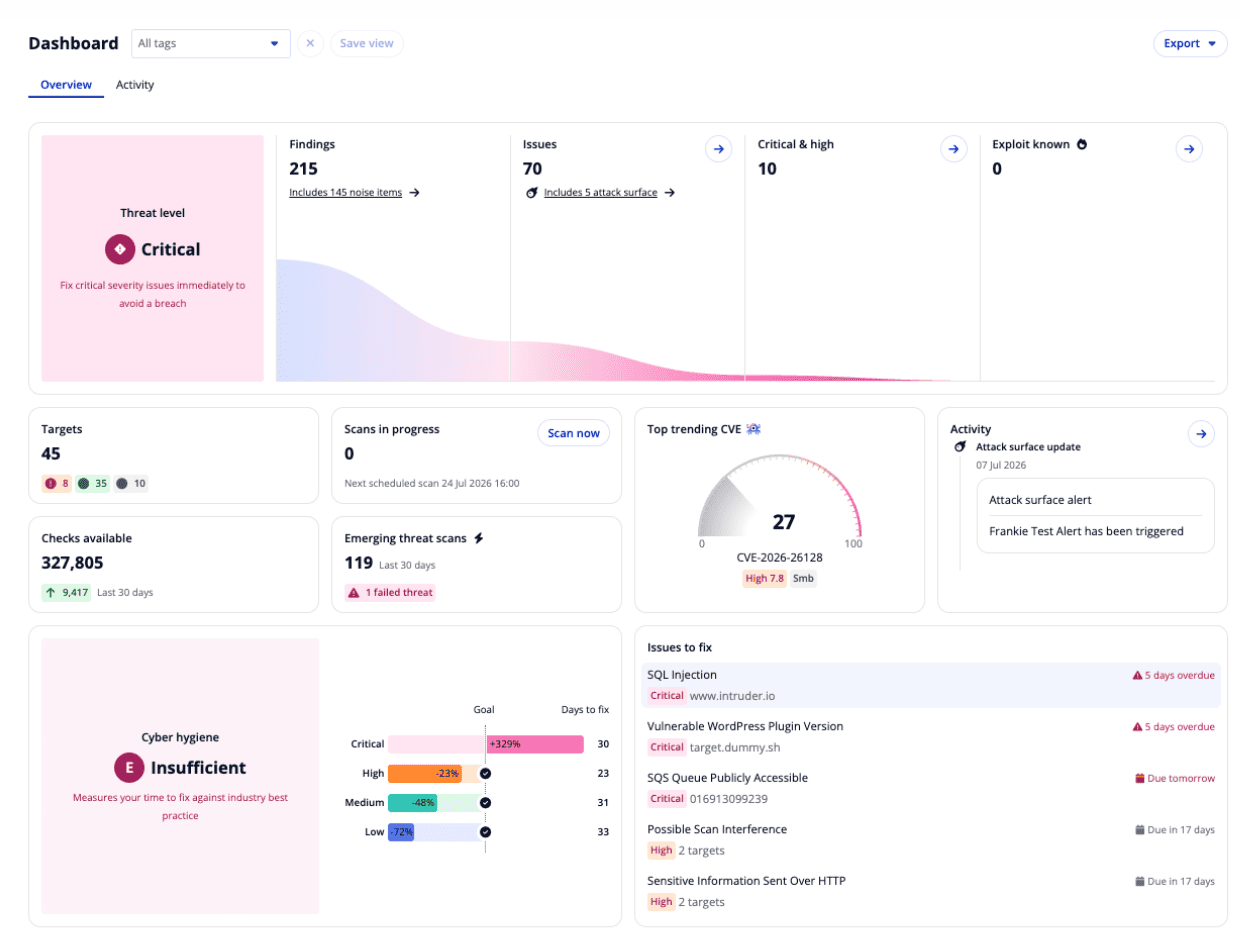
Image source: Intruder vulnerability management reporting dashboard
Intruder is primarily a continuous security testing platform, not a traditional penetration testing consultancy. Its scanners cover external infrastructure, cloud assets, and supported applications. Instead of relying entirely on periodic assessments, teams can schedule scans and receive alerts about newly disclosed vulnerabilities. Emerging Threat Scans provide additional checks when relevant threats become known.
The difference becomes obvious after a new CVE drops. A security lead needs to know whether any monitored system is affected. Waiting for the next assessment isn't particularly useful. Intruder can check the relevant targets and surface findings for review.
But detection isn't the whole job. Someone still needs to decide what gets fixed first. Intruder helps prioritize exposure, although its own customer reviews show that choosing the next action isn't always straightforward.
Features
- The scan schedule is where I'd start. Intruder supports recurring vulnerability checks, with coverage and frequency depending on the plan. Cloud adds Emerging Threat Scans and configurable schedules. Pro extends coverage to internal systems through agent-based scanning.
- For a cloud team, I'd also check asset discovery. AWS, Azure, and Google Cloud integrations help synchronize monitored targets. That matters when infrastructure changes faster than somebody updates a security spreadsheet.
- There's application coverage too. With the right license, Intruder performs authenticated DAST against web applications and APIs. You can scan behind login, but working authentication still needs configuration. I'd verify session handling before assuming protected workflows are covered.
- Now comes the harder question: which finding deserves attention? Intruder uses severity and exploit-related signals to help sort vulnerabilities. Its dashboard connects findings to scanned targets, while remediation scans can check whether issues remain detectable.
- For engineering handoff, Jira, GitHub, GitLab, and ServiceNow integrations are available. Slack and Microsoft Teams support notifications. I'd inspect one exported ticket before committing the whole workflow to automation.
- Reporting is useful beyond individual scans. Teams can download reports and compare exposure over time. That's practical for customer questionnaires, audits, and demonstrating remediation progress.
One boundary matters: recurring scanner coverage doesn't replace a deep human-led application pentest.
Intruder separately sells AI-powered web application pentesting. That's a different purchase, with different testing and reporting expectations.
Pros & Cons
The reviews worth reading here concern scan frequency and what engineers can actually do with the findings.
Gareth describes the value of new-CVE checks, but also struggles to identify the next priority. Amr reports a better prioritization experience. Both observations can be true across different environments.
Pros
✅ Daily scanning and fast response to emerging vulnerabilities: “What Intruder is best at, for us, is the daily cadence combined with rapid response to newly announced CVEs.” Gareth P., Director of Software Engineering, BrightSign · G2 · September 18, 2026 · Original review
✅ Prioritization that reduces low-value triage: “Findings are prioritized sensibly, so we spend time on what's exploitable rather than triaging a wall of low-severity items.” Amr E., Cloud Security Architect · G2 · September 9, 2026 · Original review
Cons
⚠️ Finding the next remediation priority isn't always obvious: “There's quite a lot to navigate, and it isn't always obvious what to prioritise right now to move the needle on our security score.” Gareth P., Director of Software Engineering, BrightSign · G2 · September 18, 2026 · Original review
⚠️ Some findings lack detailed repair instructions: “Sometimes we had an issue with the remediation recommendation scanner output result, which doesn't show clear steps to address the issue.” Prashant J., Security Solution Architect, Mid-Market · G2 · August 24, 2026 · Original review
Differentiator
Intruder makes the strongest case between formal penetration tests.
Its value comes from regular scanning, emerging-threat checks, and visibility into a changing attack surface. A lean security team can catch new exposure without commissioning another assessment.
I'd choose it when recurring infrastructure visibility is the missing capability. But a scanner finding isn't proof that somebody investigated every possible exploit path. Keep human-led pentesting for complex application logic, authorization testing, and deeper manual investigation.
Intruder tells you what may have become vulnerable since the last assessment. That changes when your team can respond.
Astra Pentest — Best for automated scanning and expert pentesting
Astra's $699 scanner and $5,999 expert pentest belong to different buying conversations.
One checks applications repeatedly. The other puts certified specialists into the assessment. That difference matters when a customer demands evidence of human testing, not just another vulnerability report.
Astra Pentest offers both through the same PTaaS platform. You can monitor vulnerabilities between releases, arrange expert testing, and follow fixes without rebuilding the reporting process each time.
Best for: SaaS and AppSec teams needing continuous DAST scanning alongside expert-led penetration testing services and remediation verification.
G2: 4.7/5 from 254 reviews, checked October 14, 2026.
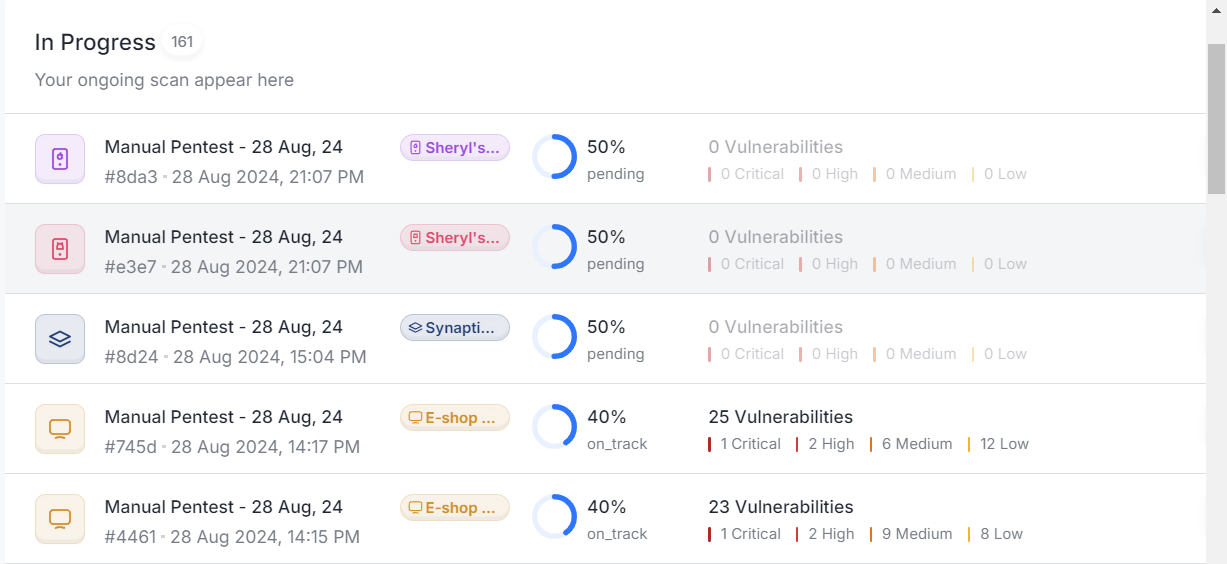
Image source: Astra Pentest Details documentation
The first decision is how much human investigation you actually need.
Astra's DAST Scanner looks for vulnerabilities across web applications and APIs, including authenticated areas. Pentest Auto goes further with autonomous AI-driven attack simulations. It isn't a full human-led pentest. Pentest Expert adds certified specialists who investigate vulnerabilities manually, including business-logic and authorization problems.
Say your SaaS product has a customer portal and an admin dashboard. Automated scanning might identify an exposed endpoint or a known vulnerability. But can one customer's account retrieve another customer's records? That's where I'd want human testers examining roles, requests, and authorization boundaries.
Astra keeps findings and remediation progress visible through its platform. Engineers can discuss issues with testers, request verification, and download reports. The key is buying the right testing depth before treating the report as evidence.
Features
- A web application can include APIs it consumes, even when those APIs use another domain. But separate login applications may require separate targets. That distinction can change the bill before testing begins.
- Authenticated DAST scanning covers application areas behind login. Scanner Lite allows three scans monthly; higher scanner plans support unlimited scans. For a product shipping weekly, that difference matters more than a long checklist of detection signatures.
- The next step depends on what the customer expects. Pentest Auto runs autonomous attack simulations and includes an expert rescan. Pentest Expert adds manual investigation by certified pentesters. I'd choose the latter when the scope includes complex permissions or business logic.
- Findings stay in the PTaaS dashboard rather than arriving only as a final PDF. Each vulnerability has status, severity, and remediation information. Astra also provides reproduction evidence and technical reporting.
- There's a practical communication channel too. Teams can discuss findings through Slack, while Jira and CI/CD integrations support remediation workflows. Integration limits vary by plan.
One customer below describes difficulty selecting the right Jira project. That's worth checking before routing findings across a large engineering organization.
After fixes, Astra offers automated rescans and expert verification, depending on the package.
Pentest Auto includes one expert rescan; Pentest Expert includes two. Both have a 30-day verification window. Enterprise extends that window to 90 days, with up to four rescans.
I'd check those deadlines against the team's release calendar before purchasing.
Pros & Cons
The useful feedback here comes from engineers and security practitioners dealing with findings after testing. The reviews aren't all independently sourced. Both Capterra excerpts were vendor-referred with incentives offered. The selected G2 reviews were seller-invited.
That context matters when interpreting the experiences below.
Pros
✅ Expert testing identifies overlooked vulnerabilities: “Astra Pentest provided a thorough and efficient security analysis, identifying critical vulnerabilities we had missed.” José Daniel S., Manager · Capterra · January 15, 2026 · Original review
✅ Responsive help during remediation: “The team was very helpful and explained the issues clearly. They responded quickly on Slack whenever we had questions or needed support with a finding.” Sajjad Haider S., Software Developer · G2 · September 30, 2026 · Original review
Cons
⚠️ Resolved findings clutter the default report: “It would be better if the report displayed only unresolved issues by default, while still keeping a full history for tracking.” Shubham K., Cyber Tech Expert · Capterra · September 2, 2025 · Original review
⚠️ Jira project selection becomes cumbersome: “The Jira integration displays all Jira projects in the dropdown, making it difficult to quickly select the correct project.” Verified User in Non-Profit Organization Management, Mid-Market · G2 · August 19, 2026 · Original review
Differentiator
Astra gives teams a choice that pure scanning subscriptions and traditional pentest consultancies don't always offer together.
You can start with recurring DAST, add autonomous testing, then purchase a manual expert assessment. Findings and verification stay in the same platform.
That's useful for SaaS teams balancing release frequency with customer security requirements.
But I wouldn't buy Pentest Auto when the requirement specifically calls for human-led testing. The cheaper assessment only saves money if it satisfies the actual security requirement.
How to choose a vulnerability testing service
Before collecting quotes, find the document that triggered the purchase. A customer might require an independent pentest, with named applications and a report they can accept. A scanner subscription won't satisfy an explicitly human-led assessment. Equally, one manual engagement won't keep watch over next month's new cloud assets.
- Start with the proof you need, then choose the model. Automated scanning suits recurring exposure checks. Human-led testing suits exploit validation and complex application workflows. Crowdsourced PTaaS may fit several scoped assessments, provided you understand who triages the reports.
- Put the scope on one page. List URLs, APIs, IP ranges, environments, user roles, and anything excluded. Don't forget access and testing hours. A quote can look cheaper simply because authenticated admin paths weren't included. Make the authorization rules explicit, especially when production systems are involved.
- Now ask for a redacted finding. Could an engineer reproduce the issue without calling the pentester? Does it identify the affected system, evidence, severity rationale, and required fix? For compliance, check whether the report satisfies the actual customer or auditor request. Don't assume every SOC 2 engagement calls for a pentest.
- The retest clause deserves a second read. Does a researcher try the exploit again, or does a scanner rerun a check? Which severities qualify? And what happens if engineering fixes the problem after the included window closes?
- Budget against units, not headline amounts. One quote may be per application, another per IP, testing credit, or annual capacity. Check minimum commitments, simultaneous engagements, reporting updates, and extra retests before comparing totals.
- Finally, get a sample Jira or ServiceNow handoff. If the finding lacks an asset identifier or responsible owner, your security team inherits that investigation. A useful vulnerability testing program needs closure rules after the report, not just a purchase order. Those rules belong in your vulnerability management program.
Turn scanner findings into owned remediation with Cloudaware
Your scanner flags a critical CVE on an EC2 instance. The finding has a severity score and an IP address. But what application depends on that machine? Who can fix it without disrupting production?
That's the gap Cloudaware addresses after testing.
Cloudaware Vulnerability Management brings findings from supported scanners and cloud-native services into a shared vulnerability view. Those records connect to the affected configuration items in its CMDB. From there, security can check the application, related CIs, environment, and responsible owner.
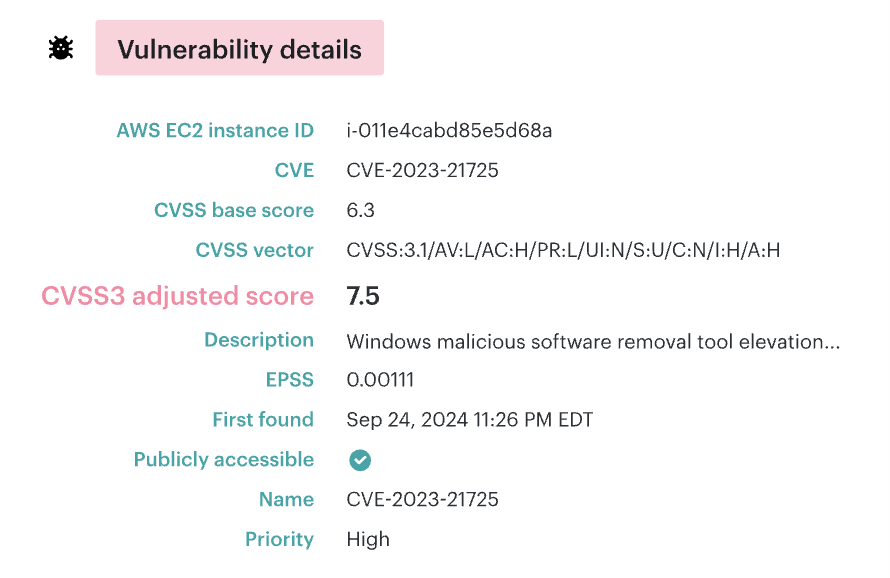
Imagine two scanners reporting the same vulnerable package on a production host. Without shared asset context, two teams might open separate tickets. With configured normalization and routing, Cloudaware can relate those observations to the same CI and coordinate remediation.
Now the priority discussion gets more useful. Is the host internet-facing? Does it support a critical service? How old is the finding, and is exploitation known? Cloudaware can bring those signals alongside severity, ownership, and SLA status. That gives the security lead a reason to escalate beyond a red dashboard badge.
The next handoff matters even more. Cloudaware groups findings into remediation tasks and routes work through configured Jira or ServiceNow workflows. Tickets can reference the affected CIs, application context, and responsible team. Engineers make the change; Cloudaware tracks its progress.
And a closed ticket isn't proof of a fixed vulnerability. Subsequent scan results support verification and closure, with exception and SLA history available for review.
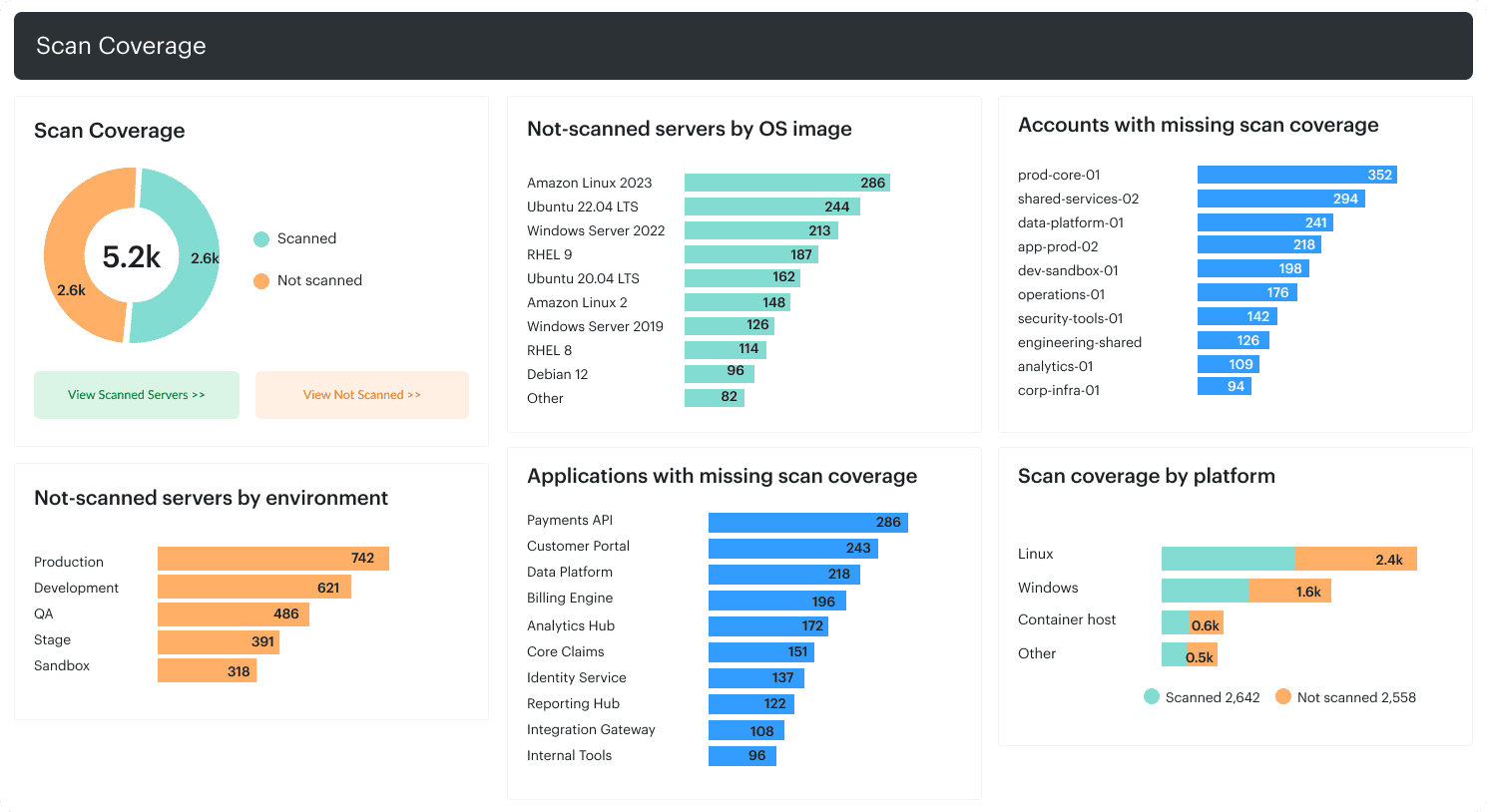
Cloudaware publishes this comparison. It isn't a human pentesting provider and doesn't automatically patch your systems. A standalone pentest PDF isn't automatically imported; supported integrations and configured workflows determine what enters the platform.