


Cloud security services are expanding because enterprise teams are no longer securing one cloud. Thales’ 2025 Cloud Security Study shows why this keeps landing on leadership agendas: 64% of respondents ranked cloud security among their top five pressing security disciplines, 55% said cloud environments are harder to secure than on-premises infrastructure.
This guide explains the cloud security landscape before vendor evaluation begins:
- What the major service categories cover
- How they differ from cloud security solutions and tools
- Where access, data, detection, and compliance fit
- How enterprise cybersecurity teams can decide which gaps matter first
Key insights
- Cloud security services in 2026 are not just managed services or tools. The useful layer is operational: discovery, context, policy evaluation, remediation routing, exception handling, and evidence.
- The 2025 Thales Cloud Security Study shows why: 64% ranked cloud security among their top five pressing security disciplines, 55% said cloud environments are harder to secure than on-premises infrastructure, and enterprises averaged 2.1 public cloud providers plus 85 SaaS applications.
- Identity remains one of the highest-risk control areas. Compromised identities, stolen credentials, secrets, and ownerless service accounts make IAM, CIEM, MFA, PAM, and access review core service categories.
- Data protection depends on classification, exposure, encryption, residency, and key management context, especially when sensitive data and KMS ownership are spread across multiple providers.
- The CSA Cloud Controls Matrix covers 197 control objectives across 17 domains, so buyers should test whether services connect controls to assets, owners, tickets, exceptions, compliance scope, and evidence.
What are cloud security services?
Cloud security services are the people, processes, platforms, and provider-native controls used to protect cloud infrastructure, workloads, identities, data, networks, and compliance evidence across IaaS, PaaS, SaaS, hybrid, and multi-cloud environments.
In enterprise environments, a cloud security service may cover:
- IAM policy design, access review, and privileged access governance
- Posture management across accounts, subscriptions, projects, and resource groups
- Workload, container, Kubernetes, and serverless protection
- Data discovery, encryption, key management, and DLP
- Managed detection, alert triage, and incident response support
- Compliance evidence, exception tracking, and audit reporting
The shared responsibility model is the starting point. AWS secures the infrastructure it runs, while customers remain responsible for what they deploy and configure. Microsoft Azure says customers own their data, identities, on-premises resources, and cloud components they control. Google Cloud frames the same boundary around customer tasks for protecting data and workloads.
Cloud protection services are not the same as security tools
A tool scans, detects, blocks, or enforces something. A service defines, configures, monitors, validates, or operates the control.
| Security tool | Security service |
|---|---|
| A CSPM platform detects public storage or risky configuration | A posture management service decides which findings matter, who owns the asset, whether the exposure is approved, and how remediation is tracked |
| An IAM tool shows users, roles, policies, and permissions | An IAM service designs least-privilege access, reviews privileged roles, and keeps permissions aligned as teams and workloads change |
| A SIEM collects security events from cloud environments | A managed detection service investigates alerts, adds asset and business context, and escalates incidents to the right owner |
| A compliance platform maps controls to frameworks | A compliance service validates scope, collects evidence, tracks exceptions, and prepares audit-ready reporting |
Buyers should separate capability from operating responsibility. The real question is not whether a tool can detect a cybersecurity issue. It is whether the organization has a repeatable management model for turning findings into accountable action.
Read also: Cloud Security Assessment Tools: 12 Best Platforms for 2026
How cloud security services work in cloud computing
Cloud security services work by turning technical controls into an operating workflow across IaaS, PaaS, SaaS, and hybrid cloud environments. The workflow usually has five parts:
- Discover the asset, identity, workload, data store, or SaaS application.
- Pull context from configuration, IAM, logs, vulnerabilities, tags, tickets, and CMDB records.
- Evaluate the finding against policy, exposure, data sensitivity, and compliance scope.
- Route the action to the right security, platform, infrastructure, compliance, or application owner.
- Track remediation, exception status, incident response, and audit evidence.
That operating layer matters because most enterprises are not securing one platform. The 2025 Thales Cloud Security Study reported that the average enterprise uses 2.1 public cloud providers and 85 SaaS applications, while 55% of respondents said cloud environments are harder to secure than on-premises infrastructure.
The shared responsibility model sets the boundary
The shared responsibility model explains where provider responsibility ends, and customer responsibility begins.
AWS, Microsoft Azure, and Google Cloud secure the underlying cloud platform, but the customer still owns many controls that shape risk:
- Identity and access
- Cloud workload security
- Encryption
- Network rules
- Logging
- Detection
- Application behavior
- Audit evidence
That distinction is why enabling native controls is not enough. A secure bucket, database, API, or workload still depends on who can reach it, whether logging is enabled, whether encryption is configured correctly, whether the asset is internet-exposed, and whether the resource is tied to an accountable team.
The service layer connects controls to operational decisions
The useful output of a cloud security service is a whole decision path: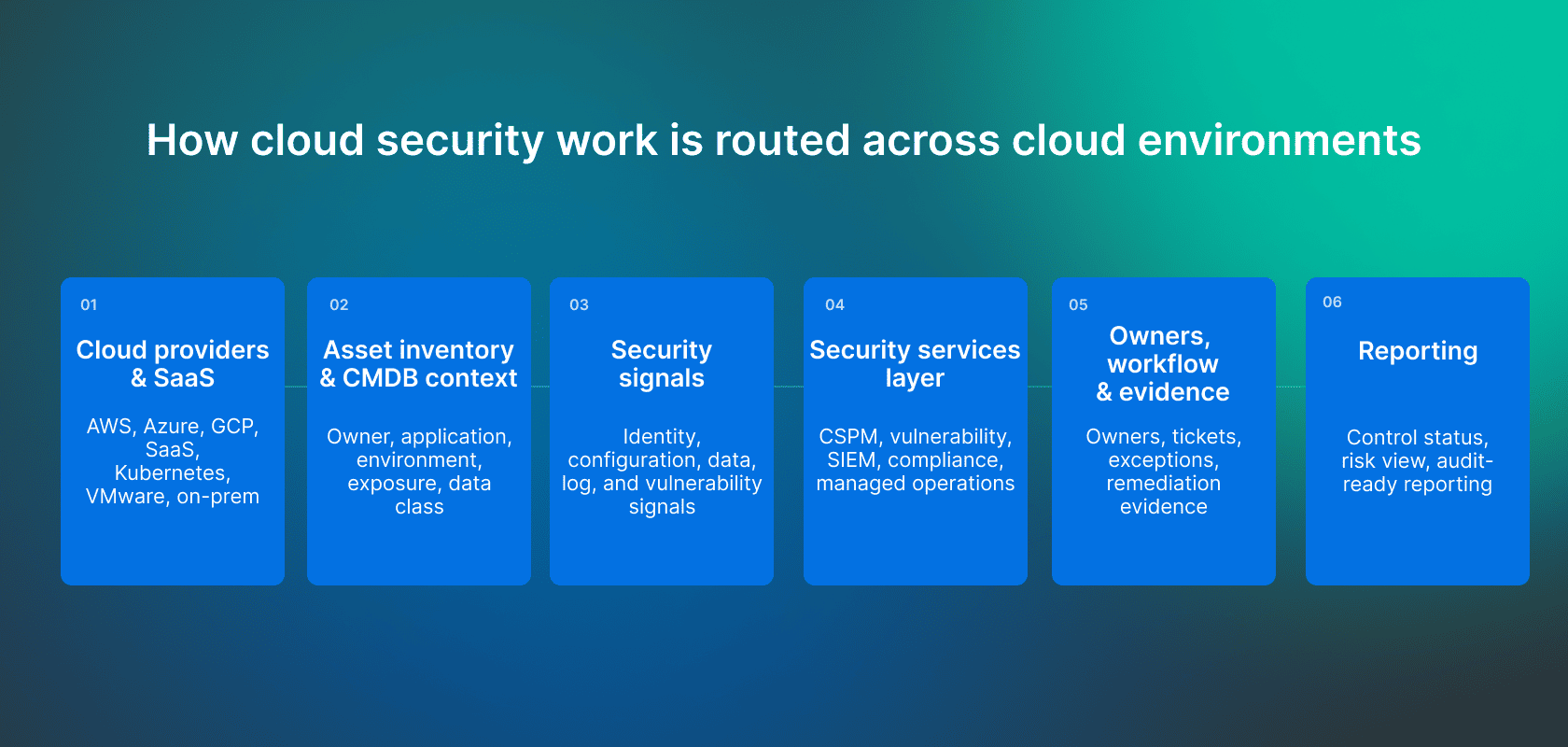 A raw finding such as “public storage detected” is not enough for an enterprise team. The finding needs asset context, ownership, data sensitivity, exposure path, policy status, exception status, and remediation ownership.
For example, a posture service may detect an exposed storage account or permissive security group. The operating value comes from turning that signal into a routed decision: assign the owner, confirm priority, open or update the ticket, track remediation, and keep evidence for reporting. That is what helps reduce MTTD and MTTR.
Types of cloud security services enterprises use
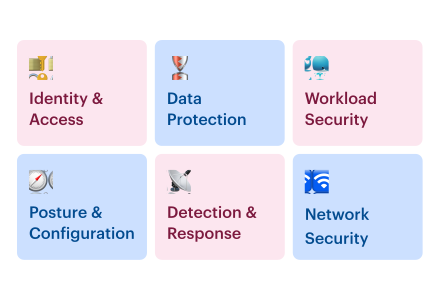
The different categories of cloud security services include identity protection, posture management, workload protection, data protection, network security, detection and response, compliance support, and advisory work.
The boundaries help with vendor evaluation, but they are not clean operational boundaries. An exposed database may involve IAM, network rules, DSPM, logging, vulnerability management, and compliance scope simultaneously. Cloud Security Alliance Cloud Controls Matrix v4.1 reflects that breadth with 207 controls across 17 cloud security domains.
| Service category | What it protects | Common tools/platforms | Business question it answers |
|---|---|---|---|
| Identity and access | Users, roles, service accounts, machine identities | IAM, CIEM, MFA, PAM | Who can access this resource, and is that access justified? |
| Posture and configuration | Accounts, subscriptions, projects, policies, exposed resources | CSPM, CNAPP, policy-as-code | Which configurations create exposure or drift? |
| Workload protection | VMs, containers, Kubernetes, serverless, runtime environments | CWPP, CNAPP, image scanning, EDR | Which workloads are vulnerable, exposed, or unmanaged? |
| Data protection | Sensitive data, storage, databases, keys, data movement | DSPM, DLP, KMS, encryption tools | Where is sensitive data, who can reach it, and is it protected? |
| Network and edge protection | Ingress, egress, APIs, web traffic, SaaS access paths | WAF, CASB, SSE, SASE, firewalls | What paths allow traffic into or out of the environment? |
| Threat detection and response | Events, logs, alerts, attacker behavior | SIEM, SOAR, XDR, cloud-native detection | Can we detect, investigate, and contain activity fast enough? |
| Compliance and audit support | Control evidence, scope, exceptions, reporting | GRC, compliance automation, evidence platforms | Can we prove controls operate across the right assets? |
| Risk assessment and advisory | Architecture, maturity, gaps, remediation priorities | Assessments, workshops, penetration testing | Which gaps should be fixed first, and why? |
Enterprise cloud risk rarely fits into a single category, so the next sections focus on the core service categories enterprises use most often to manage those overlaps.
Read also: Cloud Data Security Best Practices - A Playbook for Multi-Cloud and Migration
Identity and access services
Identity and access services control which users, roles, service accounts, machine identities, and workloads can act on cloud resources.
Google Cloud has reported that more than 70% of cloud breaches stem from compromised identities, while the 2025 Thales Cloud Security Study found that 68% cited stolen credentials and secrets as the fastest-growing cloud infrastructure attack tactic.
In multi-cloud environments, access is distributed across IAM policies, roles, groups, secrets, and so on, often resulting in ownerless service accounts, unexplained cross-account access, and audit gaps around regulated data.
IAM consulting helps define access before tools enforce it
IAM consulting is useful when access rules need to be redesigned across teams, environments, and business units. The practical output should define:
- MFA and PAM coverage for privileged users
- RBAC and ABAC rules for roles, environments, regions, and business units
- Least-privilege rules for production, non-production, and shared services
- Break-glass access with approval, expiration, and review requirements
- Ownership rules for service accounts, machine identities, and long-lived secrets
Without that model, access management turns into manual exports, emergency approvals, stale roles, and tickets that bounce between teams because no one knows whether a permission supports a real service.
CIEM adds cloud-specific visibility into excessive permissions
CIEM helps teams inspect actual cloud entitlements instead of assuming that policy intent matches runtime access.
| Access signal | Question |
|---|---|
| Admin or wildcard permissions | Is this access required, approved, and tied to a real owner? |
| Cross-account or cross-project roles | Can this identity reach production or regulated workloads from another environment? |
| Ownerless service accounts | Who approves, rotates, or removes this identity? |
| Access to sensitive data stores | Is this access inside the expected compliance scope? |
| Permissions on orphaned resources | Should the resource still exist, and who pays for it? |
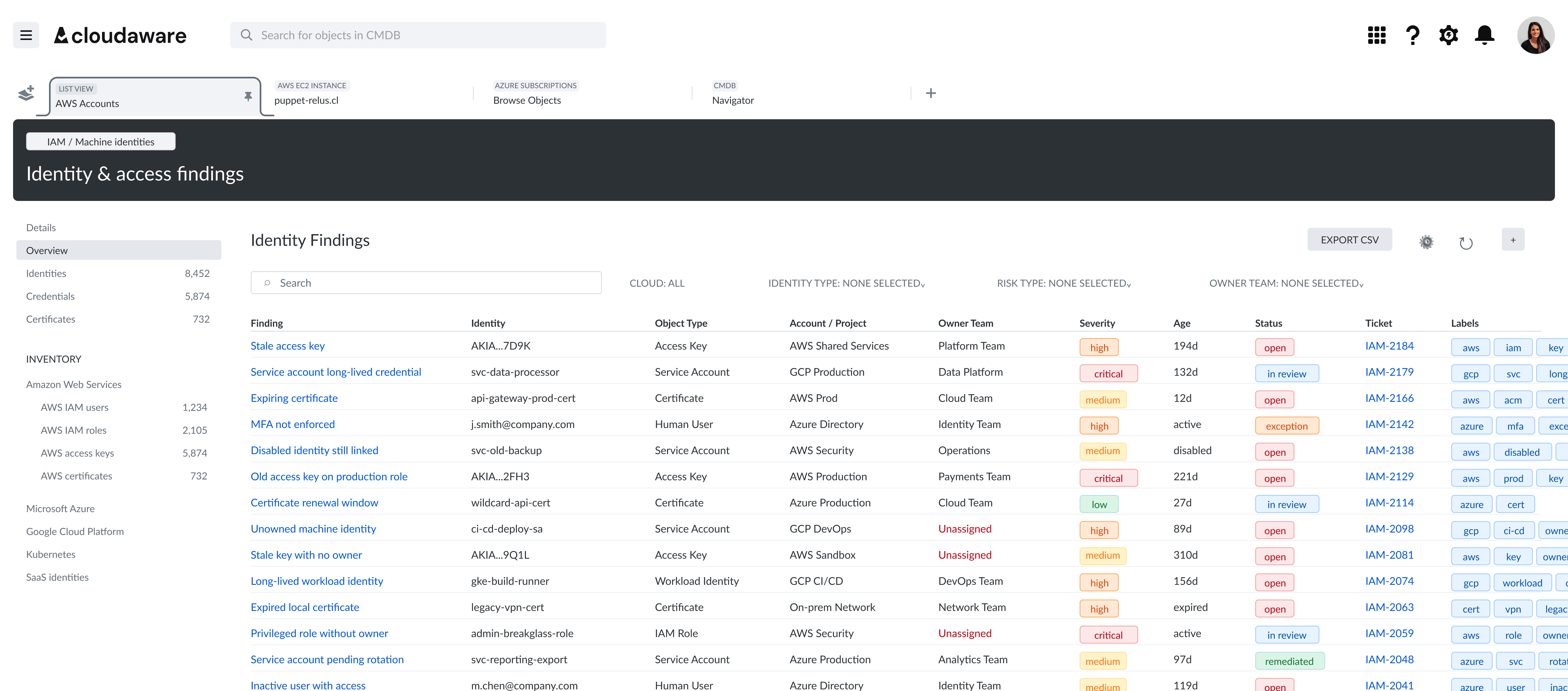 Cloudaware does not replace IAM or CIEM tooling. It helps with the operating context that helps security, platform, and infrastructure teams review access against the actual asset, owner, and business service instead of treating permissions as isolated policy objects.
Read also: Cloud Security Vulnerabilities. A 2026 Practitioner Guide to Detection, Prioritization, and Remediation
Posture, configuration, and workload protection
Posture, configuration, and workload protection services help teams find risky cloud states before they become incidents. This category usually includes CSPM for configuration and posture checks, CWPP for workload protection, and CNAPP when one platform combines posture, workload, entitlement, vulnerability, and cloud-native application security coverage.
Wiz’s 2025 cloud data research shows why posture context matters: 72% of cloud environments had publicly exposed PaaS databases lacking sufficient access controls, and 54% had exposed VMs or serverless instances containing sensitive data.
CSPM finds risky configurations before they become incidents
CSPM focuses on cloud security posture across accounts, subscriptions, projects, resource groups, and services. It is usually the right category when teams need to detect:
- Public storage, public databases, or exposed management interfaces
- Weak encryption or missing key management controls
- Disabled logging or incomplete audit trails
- Permissive security groups, firewall rules, or outbound access
- Missing owner, environment, or cost allocation tags
- Configuration drift from approved baselines or infrastructure-as-code
The useful CSPM output is a prioritized view of which findings matter because they affect production, sensitive data, compliance scope, or externally reachable assets.
CWPP protects workloads during build, deployment, and runtime
CWPP focuses on cloud workload protection across VMs, containers, Kubernetes, serverless functions, and runtime environments. It usually covers vulnerability management, image scanning, runtime protection, patch management, workload behavior, and exposure context.
| Category | Main scope | What it helps answer |
|---|---|---|
| CSPM | Cloud configuration and posture | Which resources are misconfigured, exposed, or drifting from policy? |
| CWPP | Workloads and runtime environments | Which workloads are vulnerable, unpatched, exposed, or behaving unexpectedly? |
| CNAPP | Cloud-native application and infrastructure risk | Which risks span posture, workload, identity, code, and runtime? |
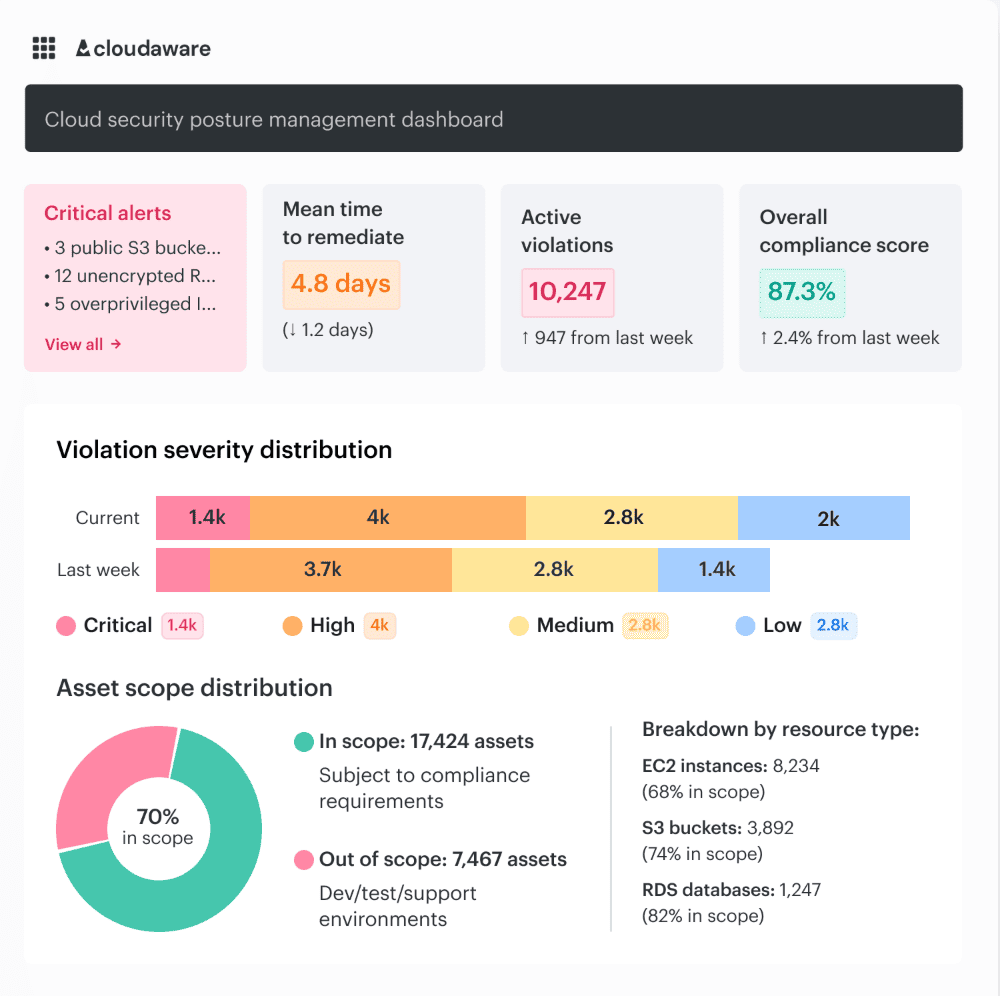 Cloudaware helps with the operating layer around CNAPP, CWPP, and CSPM: CMDB-backed asset context, owner mapping, policy violations, environment, compliance scope, and remediation workflow.
Read also: 9 Reasons Cloud Security Posture Management Matters in 2026
Data protection, network controls, and detection
Data protection, network controls, and detection are often evaluated as separate service categories, but they overlap in real incidents. A public database may involve sensitive data, permissive network access, weak IAM, missing encryption, incomplete logging, and no clear remediation owner.
The 2025 Thales Cloud Security Study found that 85% of respondents reported that 40% or more of their cloud data is sensitive. That changes prioritization: a public endpoint connected to customer data, payment records, protected health information, backups, or model-training datasets is a big problem.
Data protection starts with classification and access context
Data protection services cover data discovery, data classification, data residency, encryption, KMS, DLP, DSPM, database exposure, and sensitive data access.
Useful checks include:
- Sensitive data stored in public or weakly restricted locations
- Databases, buckets, snapshots, or backups without expected encryption
- Key management split across multiple providers or regions
- Workloads with access to regulated data but no clear owner
- Data stores outside approved residency or compliance boundaries
Thales also found that 57% of respondents use five or more enterprise key managers. In multi-cloud environments, fragmented key management makes encryption lifecycle, access control, and audit evidence harder to operate consistently.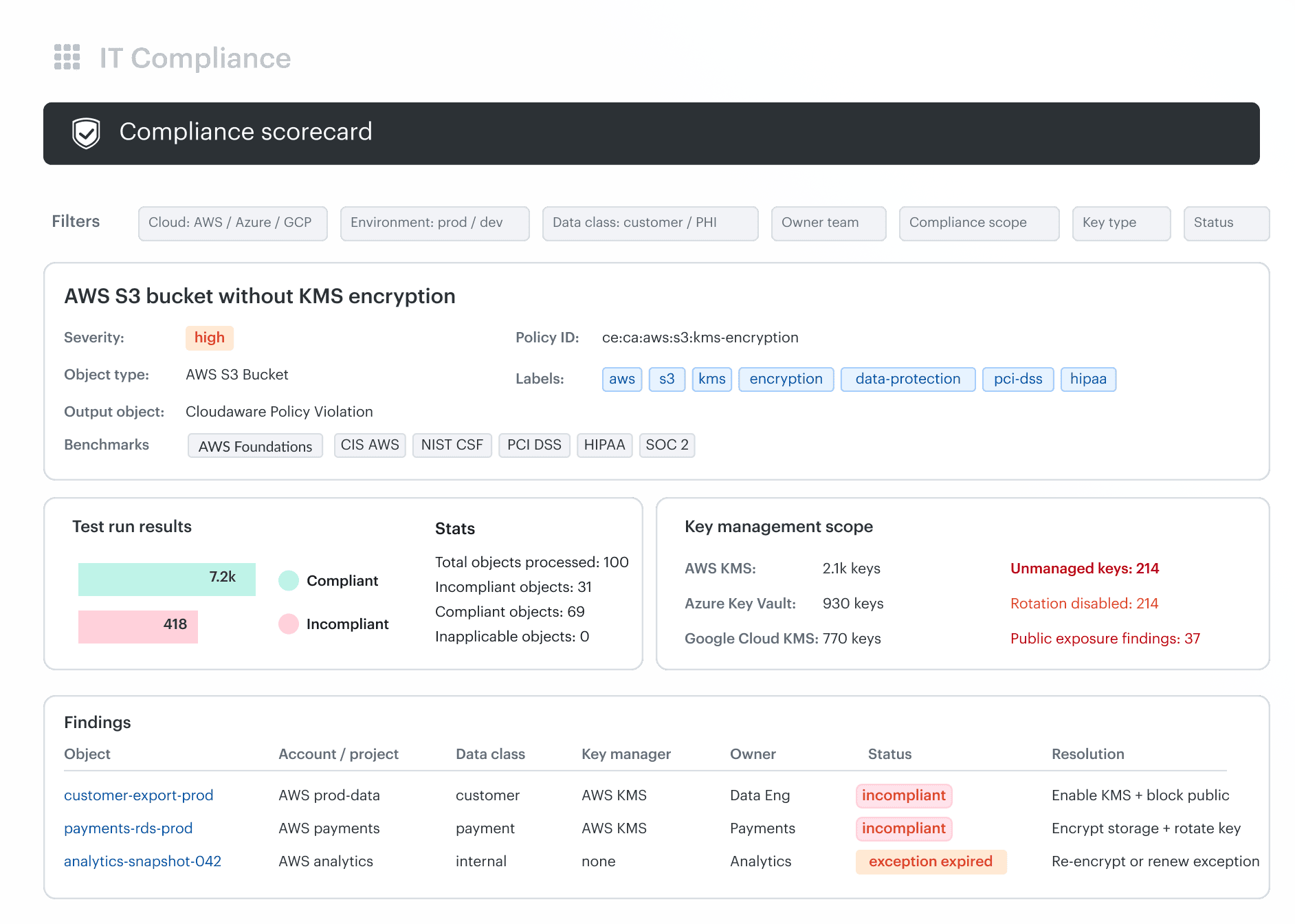 Read also: How to Perform a Cloud Security Risk Assessment in 2026
Network controls reduce reachable attack paths
Network security services control what can reach cloud workloads and what cloud workloads can reach. Common controls include WAF, firewall rules, security groups, VPC routing, transit gateway design, egress filtering, service mesh controls, microsegmentation, zero trust access, CASB, SSE, and SASE.
Detection and response services turn signals into action
Detection services collect signals from logs, identity systems, endpoint tools, cloud-native alerts, network telemetry, and workload behavior. SIEM, SOAR, XDR, EDR, and NDR help security teams detect threats, but the operational value depends on context.
| Control area | Signal | Context needed before action |
|---|---|---|
| Data protection | Sensitive data exposure | Data type, owner, environment, encryption state, compliance scope |
| Network controls | Public or unexpected reachability | Source, destination, route, firewall/security group, application |
| Detection and response | Suspicious behavior or alert | Identity, asset, owner, recent change, severity, incident route |
| Vulnerability management | Exploitable workload risk | Workload owner, exposure, patch status, runtime context, SLA |
A detection service should reduce MTTD and MTTR by connecting alerts to accountable owners. Without that operating layer, the SOC sees activity, platform teams see infrastructure, compliance sees evidence gaps, and nobody owns the full path to remediation.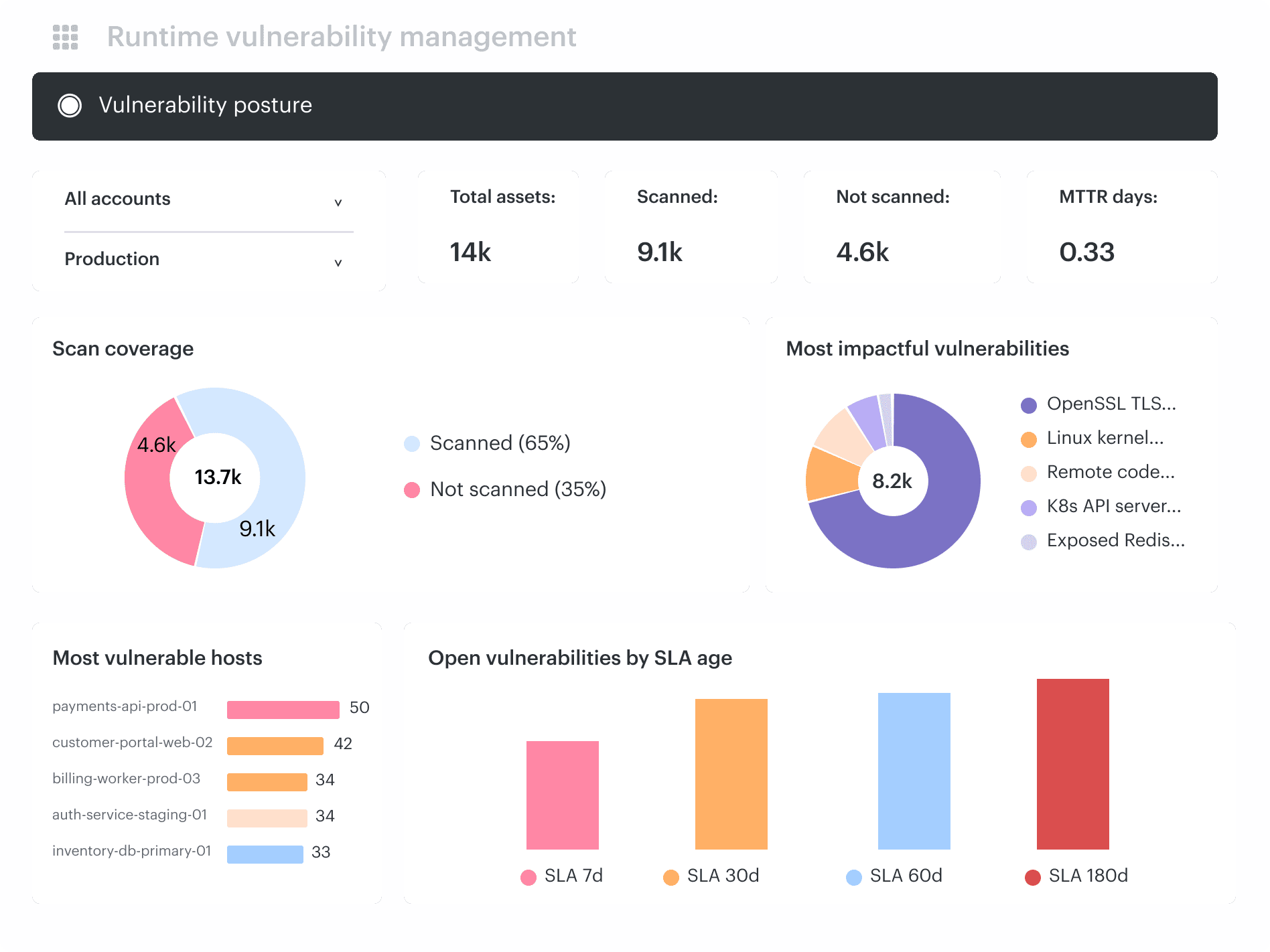 Read also: Cloud Security Automation. The Practical Framework for Multi-Cloud Teams
Multi-cloud and hybrid security coverage
Hybrid cloud computing security services protect workloads, identities, data, networks, and evidence across public cloud, private cloud, SaaS, and on-prem infrastructure.
This category matters when provider-native security controls stop at the edge of one platform, while the real environment spans AWS accounts, Azure subscriptions, GCP projects, VMware assets, Kubernetes clusters, SaaS applications, and legacy systems.
Thales reported an average of 2.1 public cloud providers and 85 SaaS applications per enterprise. In that environment, security findings cannot be trusted without normalized asset context.
Multi-cloud protection depends on normalized asset context
Security teams need a common inventory layer before they can compare findings across providers. Otherwise, each cloud service provider produces its own version of reality.
Common failure patterns:
- Duplicate alerts from different tools for the same resource
- Fragmented tags across providers, regions, and business units
- Orphaned accounts, projects, VPCs, VNets, and workloads
- Findings without owner, application, environment, or cost context
- Compliance reports that do not match real infrastructure scope
Multi-cloud security needs an operating workflow that turns fragmented cloud objects into governed assets: mapped to controls, monitored for drift, routed for remediation, and available for reporting.
| Step | Action | Outcome |
|---|---|---|
| 1 | Continuously discover AWS, Azure, GCP, VMware, Kubernetes, SaaS, and on-prem assets. | Fewer blind spots, orphaned resources, and unmanaged environments. |
| 2 | Normalize provider-specific objects into a common inventory model. | Security teams can compare findings across accounts, subscriptions, projects, and platforms. |
| 3 | Enrich assets with owners, tags, environment, dependencies, and business context. | Findings can be assigned, prioritized, and investigated without manual lookup. |
| 4 | Map assets to policies, controls, exceptions, tickets, and evidence. | Security, operations, and compliance teams work from the same scope. |
| 5 | Monitor assets for configuration changes, exposure, ownership gaps, and control drift. | Teams detect policy gaps before they become unresolved audit or incident issues. |
| 6 | Route remediation and report status through completion. | Findings move from detection to accountable action, with evidence available for audit and investigation. |
Compliance and audit support
Compliance and audit support services map technical controls to evidence that auditors, risk teams, and security leaders can review.
The work usually covers control mapping, compliance monitoring, evidence collection, exception handling, scope validation, and reporting for frameworks such as NIST CSF, NIST 800-53, CIS Benchmarks, ISO 27001, SOC 2, PCI DSS, HIPAA, FedRAMP, GDPR, and UCF.
“Are we compliant?” is too broad to be operational. The useful question is whether the organization can prove which assets are in scope, which controls apply, who owns remediation, and whether exceptions are current.
Compliance services map technical controls to framework evidence
NIST CSF 2.0 organizes cybersecurity work around Govern, Identify, Protect, Detect, Respond, and Recover. CSA Cloud Controls Matrix v4.1 gives a cloud-specific control structure with 207 controls across 17 domains.
Enterprise teams map those frameworks to provider-native controls, CSPM rules, IAM requirements, encryption policies, logging checks, vulnerability SLAs, and incident response workflows.
| Compliance task | What the service should prove |
|---|---|
| Scope validation | Which accounts, subscriptions, projects, workloads, and data stores are included |
| Control mapping | Which technical controls map to which framework requirements |
| Evidence collection | Which logs, configurations, policies, tickets, and reports support the control |
| Exception handling | Who approved the exception, why it exists, and when it expires |
| Remediation reporting | Which violations are open, assigned, overdue, or resolved |
Evidence quality depends on ownership and asset accuracy
Cloud compliance breaks down when inventory is incomplete. A missing AWS account, unmanaged Azure subscription, ownerless service account, untracked database, or stale exception can sit outside the evidence set while still carrying real risk.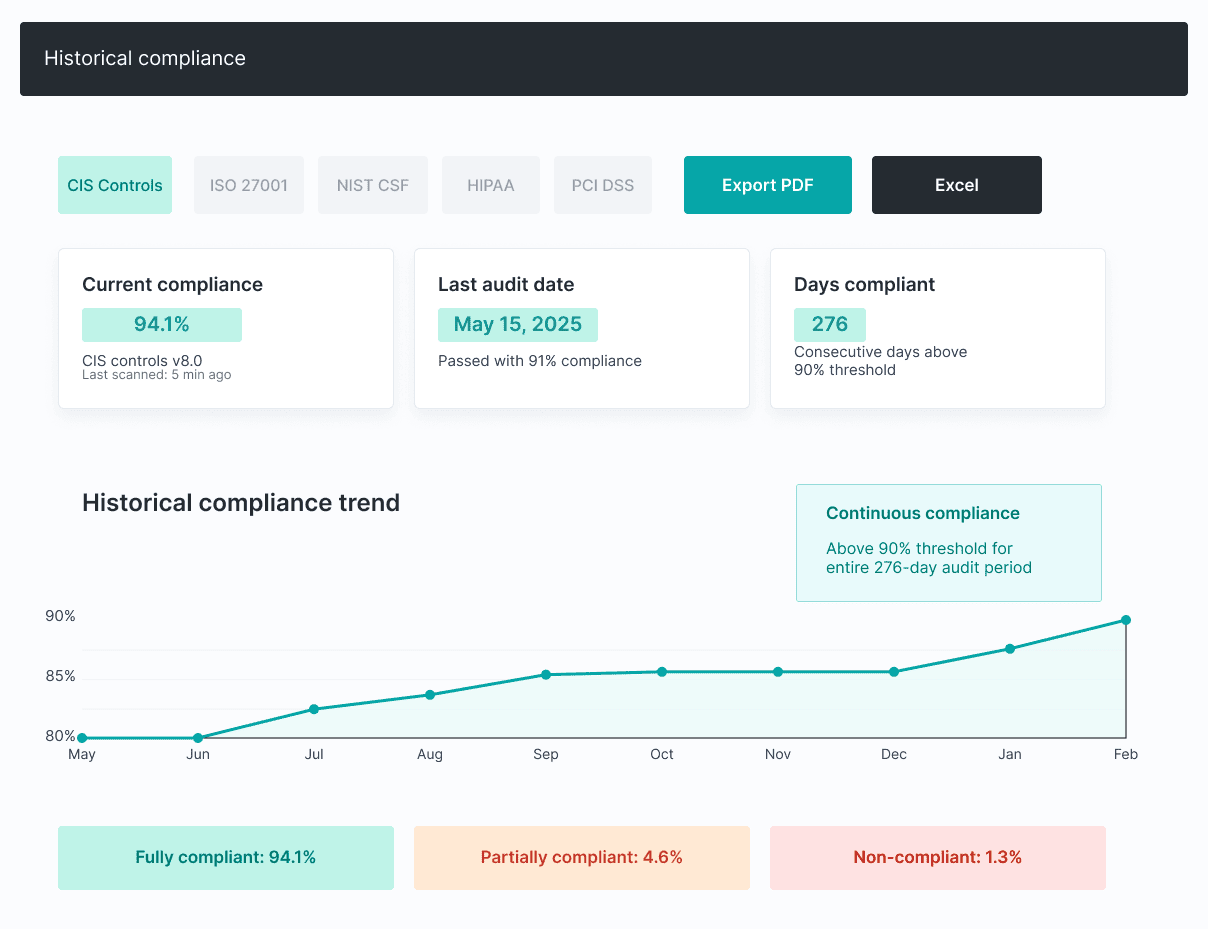 Cloudaware helps teams connect compliance findings to actual assets, owners, policies, tickets, and reporting workflows.
Read also: A 2026 Practitioner Guide to Cloud Security Vulnerabilities
How to choose the right service for your environment
Choosing the right cloud security service starts with operating gaps, not acronym coverage. Most enterprises already have native cloud controls, security platforms, advisory support, and internal processes. The question is where the current model fails: visibility, ownership, prioritization, remediation, compliance evidence, or operating capacity.
Gartner projected worldwide information security spending at $212 billion in 2025 and noted that cloud movement, talent constraints, and the threat environment were pushing security higher on CISO priority lists. More spend often produces more tools unless the organization defines what each service is supposed to operate.
Evaluation criteria should follow your operating gaps
Use this checklist before comparing vendors: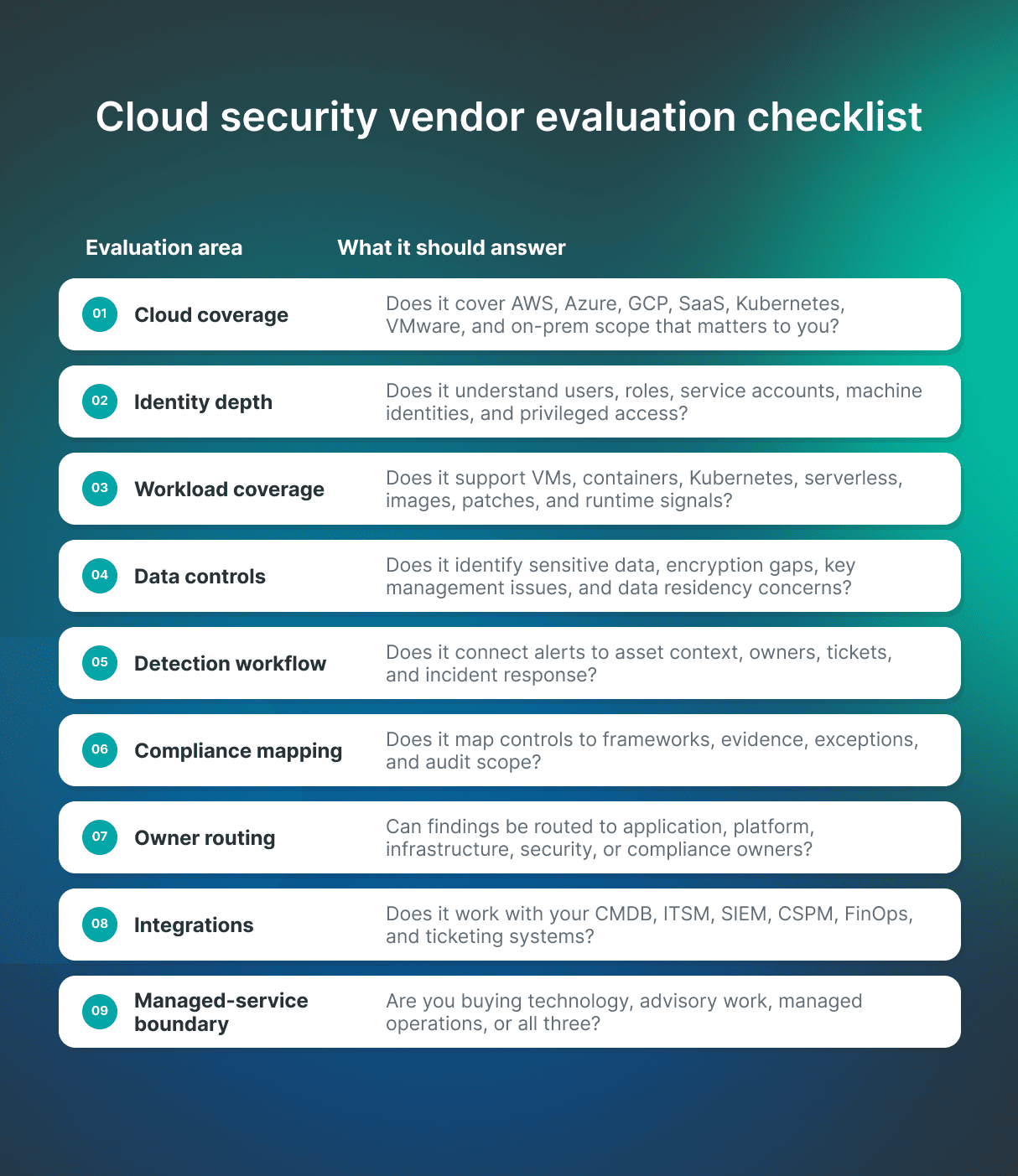
How Cloudaware supports the operating model
Cloudaware is the operating layer behind security programs. It helps teams maintain cloud inventory, enrich CMDB records, map assets to owners, expose unmanaged resources, connect assets with cost and compliance context, and support reporting across cloud and hybrid infrastructure.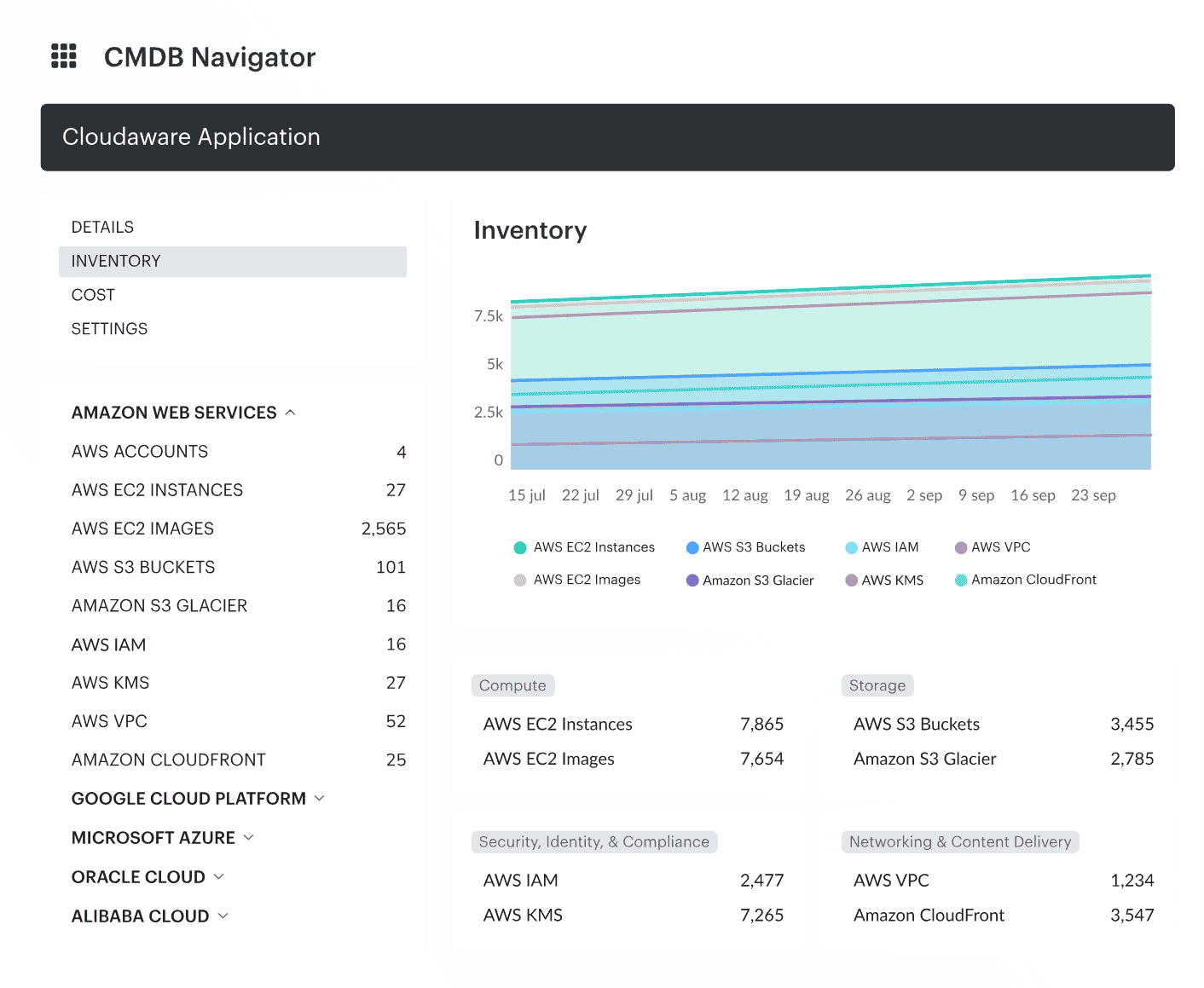 Core capabilities:
- Unified asset context: Discovers and normalizes resources across AWS, Azure, GCP, Oracle Cloud, Alibaba Cloud, VMware, Kubernetes, SaaS, and on-prem, then enriches them with owners, tags, applications, and dependencies.
- Security posture context: Links policy violations and posture findings to CMDB-backed assets, owners, environments, and compliance scope, so teams can separate general hygiene issues from findings that require action.
- Compliance: Evaluates infrastructure resources across clouds against defined policies and rules, then supports violations, exceptions, remediation workflows, and reporting.
- Ticketing and remediation workflows: Connects findings with systems such as Jira, ServiceNow, and ServiceDesk, so remediation can move through the workflows operations teams already use.
- Reporting and evidence: Gives security, infrastructure, compliance, and operations teams a shared view of asset scope, control status, exceptions, remediation progress, and evidence across hybrid infrastructure.